Megan Oxland
McMaster University

Megan Oxland (she/her) is a PhD student at McMaster University working with Dr. Laura Parker. Having previously completed her BSc in mathematics at the University of British Columbia, she moved to Hamilton, ON to pursue graduate studies in astrophysics. During her time at UBC, Megan was a LEGO robotics instructor where she taught young children how to program robots at an after school program. This job sparked an interest in both teaching and science outreach, two things she is still heavily involved with today. At McMaster, Megan is a presenter at the William J. McCallion Planetarium, and over the past year has also been involved with the McMaster portable planetarium. She is a member of Promoting Inclusion in Physics and Astronomy, and helps to organize the annual event Elevate: a Day for Inclusion in Science. Outside of academia she loves to bake and embroider, and plays on the Physics and Astronomy softball and inner tube waterpolo teams.
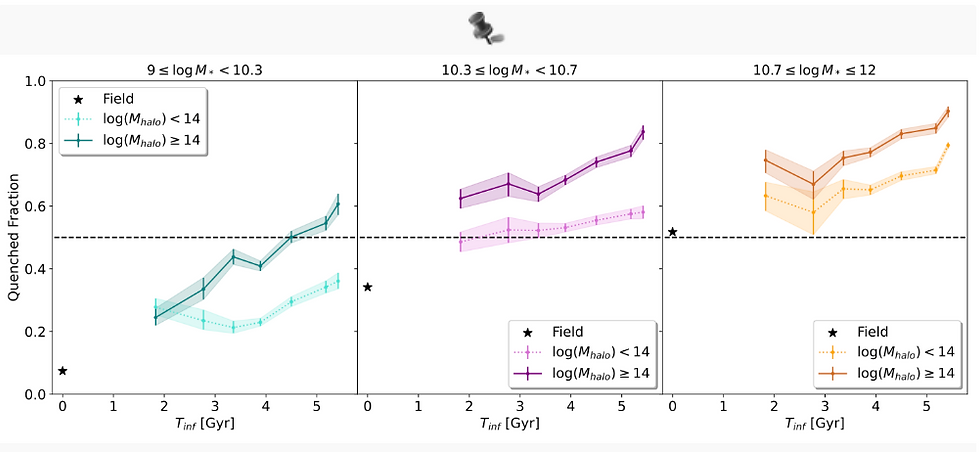
Megan is an observational astronomer who studies the evolution of galaxies in dense environments. As galaxies fall into groups and clusters they experience a reduction in star formation (a process known as quenching), and they transition in morphology from spiral to elliptical. However, there is no consensus among astronomers as to what the dominant environmental quenching mechanism is that drives this evolution. Using observational data from the Sloan Digital Sky Survey and galaxy position in projected phase space, she traces the evolution of star formation rate and morphology as a function of infall time (the time a galaxy has been a part of it’s current environment). By studying the timescales associated with the changes in these two properties, she is interested in determining the dominant environmental mechanism that drives galaxy evolution in groups and clusters.



Comments