Cassiopeia Newsletter – Winter solstice 2022
Updated: Aug 23, 2025

Date: December 20, 2022
In this Issue:
President’s Message
ALMA Matters
Canadian Gemini Office News
Carman Costain Biography
CASCA Awards 2023 – Call for Nominations
Update on CASTOR
CATAC Update on the Thirty Meter Telescope
CIRADA Update
CRAQ Summer School Announcement
Report from the LCRIC
MSE Update
ngVLA Update
SKA Update
Editor: Joanne Rosvick
Cassiopeia is CASCA’s quarterly Newsletter, published on or near the solstices and equinoxes (March 21, June 21, September 21 and December 21).
To submit a contribution please email cassiopeia.editors@gmail.com. All submissions must be received by the due date (usually 2 weeks in advance of publication) to be published in the next edition. I accept plain text and Word documents. Note that the formatting of your document will not be preserved. Please include any images as attachments in your email, not embedded in the text. Please include URLs in parentheses next to the word or phrase that you wish to act as link anchors.
President’s Message
By Chris Wilson (acting CASCA President)(Cassiopeia – Winter 2022)
The CASCA Board held two regular monthly meetings since my last report, as well as our semi-annual meeting in early December, which this year was two sessions of 4 hours each. Progress has been somewhat slower on some aspects of the Board’s Action Items list due to extended absences of both the President and the Secretary in November, which also resulted in the need to cancel our regularly scheduled November Board meeting.
On the committee and administration side, over the past 3 month, the Board has approved new Board representatives to the Ground-based Astronomy Committee (GAC), Long Range Plan Community Recommendations Implementation Committee (LCRIC), and Equity and Inclusion Committee (EIC). We also approved new members for LCRIC and the CASCA-ACURA TMT Advisory Committee (CATAC). We also approved a request from the Awards Committee to move the deadline for nominations for 2023 awards to January 15, 2023. Individual Board members are also taking some Indigenous Awareness Training by working to complete the course “4 Seasons of Reconciliation” offered by Reconciliation Education.
The Board met with several members of the Westar Subcommittee of the Education and Public Outreach (EPO) Committee at our regular meeting in September. Our discussions focussed on the recommendations in their report, particularly around the potential to hire an EPO coordinator and what funding could be available to support such a hire. We identified the need to determine how much annual funding is expected to be available for Westar programs, a discussion that is complicated somewhat by the recent economic turmoil affecting investments in general. The Board expects to conclude its review of the Westar finances and to be in a position to pass some more concrete information along to the Westar subcommittee early in the new year.
The Board dealt with a number of requests from the International Astronomical Union (IAU) and IAU members related to membership transfer, inactive members, deceased members, and new applications for IAU membership. Unfortunately, a couple of requests to apply for IAU membership came in too close to the December 15 deadline to be dealt with before the IAU’s application portal closed. If you missed applying for IAU membership this year (which is free to individuals), please watch for an announcement in fall 2023. For the Digital Research Alliance of Canada (formerly Compute Canada), we have identified Catherine Lovekin (chair of CASCA’s Computation and Data committee) as the second CASCA contact for DRAC. This helps ensure that emails from DRAC are not missed, and that a person with more expertise in this area than your current President is available to attend DRAC meetings.
On the financial side, the Board approved an extra increase for the CASCA administrator’s salary for 2023. This supplemental increase of 2.5% is in recognition of the fact that inflation in Canada is running much higher than in past years. The Board also approved financial support for the annual Canadian Conference for Undergraduate Women in Physics (CCUWiP), which is being held in person for the first time in 3 years at the University of Regina. Finally, starting in January, the Board will be actively contacting CASCA members who are 1 year in arrears with their dues.
Regarding the CASCA website, we had a glitch in mid-November that was linked to our website being moved to a new IP address. Apologies to anyone who was impacted by this problem (which of course happened over a weekend!), and thanks to our webmaster, Don Hutton, for fixing it promptly once it was identified. Vice-President Adam Muzzin has been taking the lead on updating parts of the website that had gotten out of date. The 2022 award winners should now all be up to date on both the French and English sides, as should the committee members. If you spot any further missing information, please let Adam or me know.
As required by our By-Laws, a list of the Board positions that will be open for election at the 2023 June Annual General Meeeting (AGM) was sent by the Board to both the Nominating Committee and to the general CASCA membership. There will be 3 open positions: 2 for Director and 1 for President. Please consider standing for election yourself or encouraging other good candidates to stand. Suggestions can be sent to Rob Thacker, who chairs the Nominating Committee, or via the nomination form to the CASCA secretary, Rob Cockcroft.
Just as a reminder, the next CASCA AGM will be held June 12-15, 2023, in Penticton, B.C. Over the next 6 months, the Board will be looking for an institution to host the subsequent AGM in spring of 2024.
There has been big news for the Square Kilometre Array (SKA) over the last two months. SKA1-Low will be located on the traditional lands of the Wajarri Yamaji, who have lived there for tens of thousands of years. On November 5, 2022, the Wajarri celebrated the registration of an Indigenous Land Use Agreement for the SKA-Low site. Construction commencement ceremonies were held in both South Africa and Australia on December 5, 2022 to mark the official start of construction. In Canada, the absence of any news about the SKA in the government’s Fall Economic Statement was not unexpected. For more information, please see Kristine Spekken’s article in this issue.
The Thirty Meter Telescope (TMT) has now been accepted into NSF’s queue for Large Facilities (known as MREFC), and so NSF’s Preliminary Design Review (PDR) of the TMT has begun. The PDR is an important gateway that must be passed in order for the project to proceed to the final design phase, which includes a full cost review, firm governance model, and site selection. A final design review is expected to take place roughly 18 months after the PDR. In additional news, the U.S. Department of the Interior announced that it will require formal consultation with the Native Hawaiian Community. Within Canada, CATAC has advised that Canada not host the Science Forum proposed for 2023, that had been delayed for a couple of years due to the pandemic, but recommends Canada host it in the near future, pending a return to more normal travel conditions and a successful NSF review. For more information on these and other issues, please see Michael Balogh’s article in this issue.
Finally, the Canadian Coalition for Astronomy has had a quiet few months, aside from filing a pre-budget submission for the October 8 deadline, which included recommendations for both SKA and the proposed CASTOR space telescope. For more information CASTOR, please see the article by Pat Côté in this issue.
I want to close by noting members of our community who have been honoured elsewhere. Congratulations to: Daryl Haggard (McGill), who has been awarded the 2022 Rutherford Memorial Medal in Physics from Royal Society of Canada (RSC); Ue-Li Pen (CITA and University of Toronto), who has been elected a Fellow of the RSC; Nick Cowan (McGill) and Renée Hložek (University of Toronto), who has been elected to the College of New Scholars of the RSC; and the Canadian Hydrogen Intensity Mapping Experiment (CHIME) team, who have been awarded the Brockhouse Canada Prize for Interdisciplinary Research in Science and Engineering from the Natural Sciences and Engineering Research Council (NSERC).
Wishing you all a good break over the holidays and a smooth start to the next semester,
Chris
ALMA Matters
By Brenda Matthews and Gerald Schieven (NRC)(Cassiopeia – Winter 2022)
ALMA Targeted in Cyberattack

On the morning of Saturday, October 29, ALMA was targeted by a cyberattack on its computer systems, forcing the suspension of astronomical observations and the public website. The threat was contained, and the attack did not compromise the ALMA antennas or any scientific data. A Crisis Management Team at the Joint ALMA Observatory developed a full-recovery plan in consultation with cyber security officers from ESO/NAOJ/NRAO. The recovery timescale includes the ambition to resume observations by the end of 2022. PIs impacted by the interruption in observations will be contacted once systems operations return. ALMA users should monitor the Science Portal (and emails to the CASCA exploder) for updates to observing schedules and the upcoming Cycle 10 Call for Proposals. An announcement is expected the week of 19 December about the restart of observations.
ALMA Publications

Astronomers from Canadian institutions continue to hit above their weight when it comes to ALMA publications. The attached figure shows the number of ALMA publications from 2012 through 2021 (blue bars), the number of publications with a Canadian first author (orange bars), and the fraction of publications with Canadian first authors (orange line) and with a Canadian in the author list (grey line). Canada funds about 2.7% of the global budget for ALMA, yet well over 3% of publications feature a Canadian first author. In 2021, 17% of all papers had a Canadian author. By early December, there were 368 ALMA publications in 2022.
ALMA Primer Instructional Videos
Radio interferometry, including with ALMA, is a complex and often non-intuitive field. Like the ALMA introductory document, Observing with ALMA – A Primer, the ALMA Primer Instructional Video Series is designed to provide a basic introduction to radio interferometry, calibration, imaging, and other topics in brief (5-15 minutes), bite-size pieces. In addition, short (<1minute) extracts of some of these videos are available to use when teaching or in presentations. The series is a work in progress; new videos are added periodically.
The ALMA Primer Instructional Video Series will soon be available from the ALMA Science Portal. The videos are also available from the ALMA Primer YouTube Channel. Subscribe to be alerted whenever new videos are added!
NRC is Building the Next Generation ALMA Correlator
As part of an overall ALMA2030 vision, ALMA has engaged in the Wideband Sensitivity Upgrade (WSU) project. The WSU will initially double, and eventually quadruple, ALMA’s system bandwidth and will deliver improved sensitivity by upgrading the receivers, digital electronics and correlator. The WSU will afford significant improvements for every future ALMA observation, whether it is for continuum or spectral line science. At its November 2022 meeting, the ALMA Board approved a key aspect of the WSU, construction of the ALMA TALON Central Signal Processor (AT.CSP) at a projected cost of 35.9M USD, including contingency and commissioning. The AT.CSP design leverages nearly a decade of R&D work at NRC-HAA’s Dominion Radio Astrophysical Observatory to develop the SKA-mid Correlator/beamformer (CBF). This next generation correlator for ALMA will double the current (dual-polarization) 8 GHz instantaneous bandwidth of ALMA, with a path forward to double it yet again. In addition, AT.CSP will allow up to 1.2 million channels to be sampled simultaneously, enabling high spectral resolution to be achieved across the observable band width. The AT.CSP will be a joint NRC-NRAO project, with the former focusing on the hardware and the latter the software. The AT.CSP project is expected to start in January 2023 and be completed in a little over five years. Excitingly, this success means Canada will be responsible for providing correlators for the world’s three most prominent radio interferometers, i.e., the Jansky VLA, the SKA-mid, and now ALMA. In addition, the ALMA Board in November approved construction of Phase 1 of the new Data Transmission System (DTS) that will relay from the ALMA antennas to the correlator the large amounts of data resulting from the WSU. The DTS is a joint North America-East Asia project that will be completed in 2.5 years.
More information about the correlator upgrade can be found in Carpenter et al., 2022, ALMA Memo 621.
Canadian Gemini News
By Eric Steinbring (Canadian Gemini Office, NRC Herzberg Astronomy & Astrophysics Research Centre) with contributions from Stéphanie Côté(Cassiopeia – Winter 2022)
Growth in the CGO and at Gemini
After 15 years of strong, dedicated leadership of the CGO, Stéphanie Côté has passed the baton, and stepped down in the role of Group Leader. I will now take on this role, and thank Stéphanie for her years of faithful guidance and oversight. She will remain in the CGO, and together with Tim Davidge and Joel Roediger, we are now joined by a new member of the CGO team: Wes Fraser. Wes brings deep expertise in planetary science and the Kuiper Belt, and is involved in coordinating participation in the Vera Rubin Observatory and its Legacy Survey of Space and Time (LSST). We all look forward to helping Canadian astronomers get the most from Canada’s premier optical/near-infrared facilities. Gemini Observatory itself is hiring; both tenure-track Scientific Staff and Science Fellow positions, along with a Postdoctoral Research Fellow position, especially intended for that indivdual to have the opportunity to engage in meaningful diversity, equity and inclusion (DEI) activities. Please see the latest job advertisements for details and the closing dates.
DARP Progress
Semester 2023A was the third semester for which it was requested in Canada to write the proposals anonymously following the Dual-Anonymous Review Process (DARP). Over each of these three semesters the success rates of women PI proposals has been higher than men PI proposals, which had never happened in the previous 6 years that we had monitored this. The difference in success rates between women and men PI proposals is becoming smaller, which is what you might expect, with the goal that these rates oscillate around zero eventually.
It is most important for Canadians to become familiar with these DARP guidelines as many other astronomical facilities have implemented similar requirements for their observing proposals (NASA, ALMA, ESO amongst others), and might reject a DARP non-compliant proposal.
We were pleased to see that the great majority of Gemini proposals for 2023A successfully followed the DARP guidelines, however we still received 6 proposals that did not (= 19% of proposals). Those proposals had made an effort to follow DARP but had one minor slip. This minor slip always happened in the same context, which was when referring to some of their previous observations, or other related accepted programs. Here we remind you again on how to write DARP-approved texts in these situations:
Do not refer to previous observing programs at any observatories in an identifying fashion, including past Gemini programs. Replace “We have observe this galaxy in our previous 2023A program”, instead say “GN-2023A-Q33 observed this galaxy previously”, without taking ownership for the program, ie: never say “Our GN-2023A-Q33 program”.
Same goes if your targets are selected by one of your past or ongoing surveys on another facility or are Target-of-Opportunity targets to be triggered by data from another of your programs. Replace “Our targets were selected from our 1.45 micron WIRCAM imaging survey of this star-forming region from our program 21BC08”, say instead “Our targets were selected by the 1.45 micron WIRCAM imaging survey of this star-forming region from program 21BC08”.
And same goes if you need to refer to an accepted proposal at another facility for which you have not yet received data. Replace “These data will complement our NIRSPec data from our accepted JWST program 1686 PI=Smith”, say simply “These data will complement the NIRSpec data to be acquired by JWST program 1686”. Do not take ownership of the program.
In all these cases when it is written anonymously in this way it does not make it obvious if you are the PI or Co-I of this other previous/future program, or have an arrangement with a co-I to get the data, or maybe are simply ready to scavenge the archives when the data are made public.
Please make sure to consult the ‘DARP guidelines’ page for your future Gemini proposals, and feel free to consult with us (CGO at Gemini@nrc-cnrc.gc.ca) before the deadline in case of doubt or questions.
New Instrument, New Opportunities
The Gemini High-resolution Optical SpecTrograph (GHOST) is now on sky at Gemini South, and is completing its commissioning phase. This is a next step, following along a well-honed track of Canadian expertise in high-resolution optical spectroscopy, a prior one being Gemini Remote Access to CFHT ESPaDOnS Spectrograph (GRACES) at Gemini North. GRACES is also fibre-fed, running to that Canada France Hawaii Telescope instrument. Just this year a Gemini press release has highlighted a stream of old stars detected, via GRACES, at the edge of the Galaxy as a “shredded” star cluster: C-19. From that press release: “GRACES provided the critical clues that C-19 is a disrupted globular cluster and not the more common disrupted dwarf galaxy,” explained Kim Venn of the University of Victoria, the lead investigator for the GRACES observations. “We already knew that this was a very metal-poor stream, but identifying it as a globular cluster required the precision metallicities and detailed chemical abundances only available with high-resolution spectra.”
Got a big, new idea? Gemini is calling for letters of intent for Large and Long Proposals, to begin in semester 2023B. Letters are due by 13 February 2023. The deadline for full proposals will be 1 April 2023. See the official Call for Proposals for more information, including all the available instrument resources here. Don’t forget Fast Turnaround! The next deadline will be at noon Hawai’i Standard Time on 31 December 2022; in the South you can ask for GMOS-S (Gemini Multi-Object Spectrograph) and F2 (Flamingos 2), available for most of this coming cycle, while IGRINS (Immersion Grating INfrared Spectroph) and Zorro (speckle imaging) are expected to be available for at least part of that time. The latest news on Gemini North, which had been in regular maintenance shutdown since 10 October, but then offline longer due to an incident during mirror maintenance, is that the Observatory expects to complete repairs in January. It should return to nighttime operations sometime in late February; the 2023A semester programs have been planned out to adjust for that.
Carman Costain (former president of CASCA) Biography
By Alan Bridle (NRAO, retired)(Cassiopeia – Winter 2022)
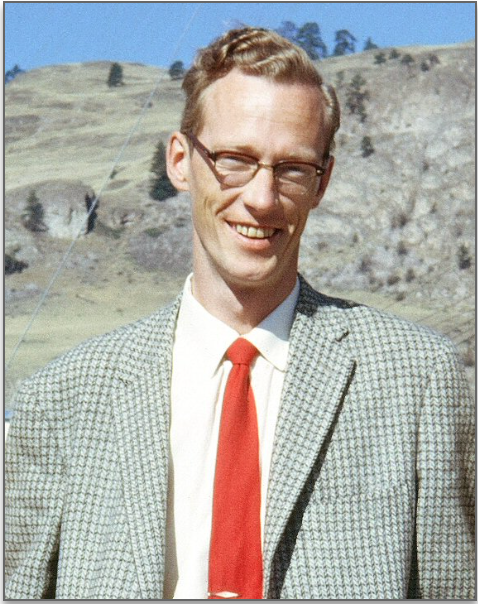
Carman Hudson Costain was born on April 26, 1932 in Saskatoon, Saskatchewan, Canada. He was the fifth child and third son of Canadian-born Henry Hudson Costain and American-born Mary Elida Ekin. Henry Hudson Costain was the son of a Prince Edward Island farmer. The Costain ancestry can be traced to a John Costain who emigrated to Prince Edward Island from the Isle of Man in 1832.
Carman first became interested in electronics as a hobby while in high school in Saskatoon. He had summer jobs working on auroral radar backscatter studies – a specialty at the University of Saskatchewan owing to its high geomagnetic latitude and the influence there of radar and atmospheric researcher Peter Forsyth, who at times employed both Carman and his elder brother Cecil as undergraduate assistants.
Carman received his Bachelor’s degree in Physics from the University of Saskatchewan in 1953. His interest in radio astronomy began that summer when he took a temporary job with Forsyth (who was then at the Defense Research Telecommunications Establishment at Shirley Bay near Ottawa) to construct a phase-switched two-dipole interferometer to monitor the ionospheric scintillations of the bright radio source Cassiopeia A. After spending that summer in Ottawa Carman returned to Saskatoon for his Master’s studies. He built another phase switched interferometer there in order to study ionospheric scintillation of Cassiopeia A at both upper and lower culmination. Nine months of data collected there formed the basis for his Master’s degree but (as he recounted in a 1974 tape-recorded interview with Woody Sullivan that is available online in the NRAO historical archives) this experiment made him more curious about radio astronomy itself than about using radio sources to study the ionosphere.
In 1955 it was not possible for a Canadian to do Ph.D. thesis work in radio astronomy within Canada. After considering possibilities for working in radio astronomy at Jodrell Bank in England, at the University of Sydney in Australia, or for doing upper atmosphere research at Cornell University, Carman decided to follow his elder brother Cecil’s path by doing his Ph.D. In England at Cambridge University, where he was accepted into the radio astronomy group at the Cavendish Laboratory. (His college affiliation was with St. John’s.)
Carman married Martha Leona “Lee” Leopold in Saskatoon on September 5, 1955. Later that month the newlyweds crossed the Atlantic on the Canadian Pacific liner “Empress of Scotland”. Carman immediately began graduate work in the Cambridge radio astronomy group headed by Martin Ryle, under the direct supervision of Francis Graham-Smith.
His first project at Cambridge was to set up an interferometer to monitor the November 1955 lunar occultations of the Crab Nebula. Those observations proved problematic, but the experience he gained led to successful observations of the occultation that followed in January 1956 and to Carman’s first radio astronomy paper: “Radio Observations of a Lunar Occultation of the Crab Nebula” with Bruce Elsmore and George Whitfield, published in the Monthly Notices of the Royal Astronomical Society, Vol. 116, pp.380-385 (1956).
Carman’s early work at Cambridge was done at the old Rifle Range observing site off Grange Road. In 1957 the Cavendish Laboratory’s acquisition of a much larger site 8 km south-west of Cambridge at the former Lord’s Bridge Air Ammunition Park made possible the project that became the main part of his Ph.D. thesis – a large telescope designed to survey the whole northern sky at 38 MHz. His earlier attempt to study the galactic emission at this frequency with an antenna at the Rifle Range that had been used for solar studies by John Blythe in 1954 showed that the structure of the emission was too complex to be mapped adequately with that antenna. A plan was therefore made to build a dedicated corner-reflector array to map the galactic emission and discrete sources at 38 MHz at the new site. The then-novel approach was to combine data from many interferometer baselines between a long East-West corner reflector array and a smaller “portable” corner reflector segment that could be moved to many locations in the North-South direction. This approach was an early example of the radio image-forming method known as “aperture synthesis”, for which Martin Ryle was awarded the Nobel Prize for Physics in 1974.

In 1956 Carman extended his stay in Cambridge for three more years in order to design, build and commission the 38-MHz aperture synthesis array under Graham-Smith’s supervision. He also made the first observations with it, including a scaled-array study of the galactic radio spectrum. At Martin Ryle’s urging he also looked into the feasibility of using those data to estimate the integrated extragalactic nonthermal background brightness. That quantity was significant for the cosmological
interpretation of Ryle’s radio source counts at the time of his famous dispute with Fred Hoyle over using the counts as evidence against the Steady State Theory. (I inherited this task with a mandate to extend Carman’s analysis to lower frequencies as part of my Ph.D. Thesis.) Carman also made a preliminary study of the North Galactic Spur, which remained a feature of great interest to him. The all-sky survey was completed and published in 1966 by Phil Williams, Sidney Kenderdine and John Baldwin (“A Survey of Radio Sources and Background Radiation at 38 Mc/s”, Memoirs of the Royal Astronomical Society, vol. 76, pp. 53-110).
A significant diversion to Carman’s work on the 38-MHz survey occurred when Sputnik One was launched into Earth orbit on October 4 1957, He dropped all else he was doing to work night and day with Bruce Elsmore and George Whitfield to improvise a way to detect Sputnik’s radio signals and thus to study the satellite’s orbital decay. He later recalled that feverish effort with satisfaction as an example of the teamwork that existed among the Cambridge radio astronomy students and staff at the time.
Teamwork was also needed to provide the motive power for the moving corner reflector element of his 38-MHz antenna at Lord’s Bridge, which had to be manually carried from one interferometer station to the next. This was a strenuous task that I was told only Carman himself ever accomplished unaided. More often, a group of students with strong backs went out to Lord’s Bridge from the Cavendish Lab to hoist and move the traveling corner reflector, a procedure that was artfully acknowledged in the final survey paper in 1966 – which remarked that “Through the unstinting exertions of all members of the radio astronomy group both past and present the observations were carried to a successful conclusion.”
The ad hoc response to the Sputnik launch may have contributed to the fact that Carman and Lee returned to Canada in 1959, with their son David – born in Cambridge in 1958 – before Carman had finished writing his Ph.D. thesis. He joined the newly formed Dominion Radio Astrophysical Observatory (DRAO) upon his return to Canada in 1959, finished his thesis, and received his Ph.D. – the first awarded in radio astronomy to any Canadian – in 1960.
While acting as my local Ph.D. supervisor during my secondment to the DRAO from the Cavendish Laboratory in 1965/66, Carman urged me to complete as soon as possible: “Write only what you need to get your degree as fast as you can, so you can get on with your own science” was his advice. I suspect that sentiment stemmed from his experience of finishing a Ph.D. thesis while simultaneously starting his professional research career and raising a young family – which grew to include second son Robin, daughter Leslie and third son Philip.
Once at the DRAO, Carman worked with the new observatory’s 25-m single dish while starting to plan for his major project – a T-shaped dipole array to survey the galactic radio emission and measure discrete radio source flux densities at 22 MHz with about one degree angular resolution.

Unlike his 38-MHz synthesis array in Cambridge, the new 22-MHz array at DRAO was a filled-T configuration in which 624 full-wave dipoles provided all of the interferometer spacings between the 1.3-km East West arm and the 440-m North-South arm simultaneously, This configuration allowed the meridian transit pencil beam to be formed in real time so that periods of quiescent ionospheric scintillation and refraction could be fully exploited.
The 22-MHz array was designed so that the signal from dipoles in the arm overlap region was fed into both the East-West and North-South arm transmission lines so that the largest-scale structure of the galactic emission would be represented as accurately as possible in the final survey data, The array was completed in 1964 by Carman working with engineer David Lacey, radio astronomer Rob Roger and technician Jack Dawson. Construction of the wooden support structure began in 1962 but the transmission lines, phasing networks and electronics were a hands-on effort by the four array staff members.
Preliminary observations with it showed that ionospheric conditions over Penticton were even more favorable for decametic radio astronomy than had been anticipated, so in 1964 it was decided to build a second T-shaped array at the DRAO to map the galaxy and to study discrete sources at 10 MHz. That project was headed by John Galt, who then worked with a series of staff seconded to the DRAO in various ways from the Cavendish Laboratory – Peter Scheuer in 1964, Chris Purton in 1964-65, me in 1965-66, and Jim Caswell in 1967-69. Although Carman was not formally part of the 10-MHz array project, his deep understanding of how the ionosphere affected decametric radio observing, and his mentoring of the younger contingent from Cambridge (especially me) who were directly involved in it, were important to its success.
The 22-MHz array began to take data at a time before digital computers were ubiquitous in radio astronomy. Data reduction for its unique data product – the all-sky survey – was done at first in remote computers in Vancouver and in Ottawa. Unfortunately, this meant that the survey data reduction proceeded only very slowly until the DRAO acquired its own on-site computer(s).
One unexpected result was, however, evident from direct visual inspection of the 22-MHz project’s real-time chart records: a few of the discrete sources appeared brighter than expected from their higher-frequency spectra, implying that their low-frequency emission is enhanced by steep-spectrum components. In particular, the 22-MHz emission from the Coma Cluster had an (apparently) extended component that was not then known from observations at higher frequencies. While the resolution of the 22-MHz array was insufficient to show whether this steep-spectrum component was in fact a single extended emission region or a blend of several discrete sources, it sparked Carman’s interest in how extragalactic sources in rich clusters of galaxies might evolve to have steeper spectra than those in other environments. I recall many long winter nights spent with him at the DRAO in 1966 discussing astrophysical issues that have since been clarified by direct imaging of steep-spectrum “tails” and “relics” in galaxy clusters by a new generation of low-frequency arrays.
One example of the 22-MHz survey identifying what would become a seminal object for this emerging field of study was the recognition that a previously known but unremarkable radio source in the direction of the galaxy cluster Abell 2256 was unexpectedly bright on the 22-MHz survey chart records (Costain, C.H., Bridle, A.H. and Feldman, P.A. “Decametric Radio Identification of an Extragalactic X-ray Source”, Astrophysical .Journal, vol.175, pp. L15-L18 (1972)) . Abell 2256 has since been shown to be a merger product – and 50 years later its complex low-frequency radio emission is the “poster child” for studies of interactions between the ejecta of radio galaxies and magnetic fields in the hot intracluster gas (see, for example, Breuer et al.,“The Mergers in Abell 2256: Displaced Gas and its Connection to the Radio-emitting Plasma”, Monthly Notices of the Royal Astronomical Society, vol.495, pp. 5014-5026 (2020) and Rajpurohit et al. “Deep Low frequency Radio Observations of Abell 2256 I . The Filametary Radio Relic”, Astrophysical Journal, vol.927, pp. 80-101 (2022)).
Carman was inspirationally enthusiastic about all aspects of low-frequency radio astronomy, ranging from the theory and design of the array antennas, to understanding the effects of the ionosphere on the data, to handling the demanding computational needs of aperture synthesis, to exploring the astrophysics of the classes of cosmic radio source to which low-frequency instruments are especially sensitive.
The 22-MHz array’s sky survey was finally fully reduced and published in 1999, ten years after Carman’s untimely death (Roger, R.S., Costain, C.H., Landecker, T.L., and Swerdlyk, C.M., “The Radio Emission from the Galaxy at 22 MHz”, Astronomy and Astrophysics Supplements, vol.137, pp 7-19).
In the early 1970’s Carman turned his attention to the DRAO’s 21-cm hydrogen-line Synthesis Telescope which grew from three 8.5-m paraboloids (two moveable along on an East-West track) to become its next major instrument, eventually with seven elements. Carman played a leading role in this telescope’s design and also in the development of the software necessary for its successful operation.
He also became active in the leadership of the Canadian Astronomical Society from 1974 to 1982, serving on its Board of Directors and then becoming its President from 1978 to 1980. During that period and thereafter, he promoted the concept of a Canadian Long Baseline Array (CLBA), a project intended to provide a set of antennas all across Canada dedicated to the science of very-long-baseline interferometry, an active research field that had been pioneered by staff at the National Research Council (NRC) and in several Canadian universities. This ambitious project eventually reached the highest priority for funding by the NRC, but the federal government nevertheless declined to fund it, thereby ceding the field to the Very Long Baseline Array (VLBA) operated by the U.S. National Radio Astronomy Observatory (NRAO).
In 1984 Carman was called to Ottawa to assist with a proposed upgrade of the 46·m radio telescope at the Algonquin Radio Observatory (ARO) for use at mm wavelengths. While there he worked on using holography to measure the surface figure of the reflector to an accuracy of a few tenths of a millimeter – but in 1986 the upgrade project was abruptly terminated by budget cuts and ARO was closed as a national radio astronomy facility. Carman then returned to DRAO to develop improved imaging techniques for the Synthesis Telescope, a project he was working on at the time of his death on December 21, 1989.
Away from his professional career, Carman played an active role in the social life of Penticton as a member of the Penticton Rotary Club and as an avid golfer and curler. His interest in electronics as a hobby extended to building his own color TV set, which he completed just in time to allow a large gathering to watch the Apollo 11 Moon landing at his and Lee’s house on 20 July 1969.
Carman Costain was a true pioneer of radio astronomy in Canada, and I am honored to have had him as my Ph.D. Thesis supervisor for the year that I spent at the DRAO in 1965/66.
2023 CASCA Awards: Call for Nominations
By Vincent Hénault-Brunet (CASCA Awards Committee)(Cassiopeia – Winter 2022)
Dear CASCA members,
We are now accepting nominations for the following 2023 CASCA awards:
Nominations for the Plaskett medal should be submitted by the department chair, and we will accept one nomination per department. This award allows the research excellence and hard work of our graduate members to be recognized. Students, don’t wait, take this email to your advisor/head of department and ask to be considered for your department’s nomination. Graduate chairs, please don’t miss this opportunity to highlight the work of your students.
We would like to have a diverse group of award nominees to choose from, so we especially encourage first-time nominators. Detailed instructions for how to write a nomination letter are listed here. Can you think of someone at your institution or in your research collaborations who perhaps has been overlooked for awards because of biases? Consider nominating them this year!
Nominations for all awards should be submitted as a single pdf, addressed to the Chair of the CASCA Awards committee, Vincent Hénault-Brunet, and emailed to vincent.henault@smu.ca. Nominators and nominees must be CASCA members in good standing. If in doubt, please check with the CASCA administrator at casca@casca.ca. The deadline for nominations is January 15th, 2023. Please refer to the relevant CASCA award pages for additional nomination procedures.
We look forward to hearing from you, and to celebrating another year of great achievements from our fellow CASCA members!
Best wishes,
The CASCA Awards committee
Vincent Hénault-Brunet, Pauline Barmby, Jayanne English, Craig Heinke, Tracy Webb
Update on CASTOR
By Patrick Côté, John Hutchings (NRC Herzberg Astronomy & Astrophysics Research Centre)(Cassiopeia – Winter 2022)
International partnerships in the CASTOR mission continue to develop. In October, the UK Space Agency approved the submission of a formal funding proposal targeting several aspects of CASTOR involvement by the UK; that proposal is under review, with the results expected later this month for work to begin in early 2023. The ISRO APEX advisory group met in November to review a proposed a joint mission study with CSA; a de-briefing of that meeting is expected soon. The JPL detector group continue their work on detector development towards the expected delivery of QE-enhanced detectors for testing in Canada early next year. Additional, less-defined ideas are also being pursued with NASA, Spain, and others. When formalized, any agreements will be detailed in the mission approval and funding request to the Canadian government for a Canadian led mission, in late 2023.
In September, ACURA formally approved CASTOR as a mission they will support as a national facility. This development will be noted in their discussions with Government as part the Coalition for Canadian Astronomy, together with CASCA and Industry.
The full mission definition (Phase 0) study continues to make good progress with detailed interactions between the international science team and the industrial contractors. This work will culminate in May next year. The technical development contract will continue through 2023, involving industrial contractors and NRC-HAA.
For more information on the mission, see here.
CATAC Update on the Thirty Meter Telescope
By Michael Balogh (CATAC Chair)(Cassiopeia – Winter 2022)
Site Update
On July 7, with Act 255 the Governor of the State of Hawai’i signed bill HB2024 into law, establishing a new Authority responsible for managing Mauna Kea lands. There will now be a transition period of up to five years, before authority is fully transferred from the University of Hawaii to this new body. The Authority consists of 11 voting members, listed here. The selected representative of the Mauna Kea Observatories is Rich Matsuda of Keck Observatories.
In October 2022, the Department of the Interior announced that it will require formal consultation with the Native Hawaiian Community, and is developing new policies and procedures to “further affirm and honour the special political and trust relationship between the United States and the Native Hawaiian Community”.
The TMT construction permit on the alternate site, Roque de los Muchachos Observatory (ORM) had been revoked following a successful appeal by the environmental group Ben Magec. The TMT International Observatory (TIO), Instituto de Astrofisica (IAC) and the Cabildo (local government body) appealed this decision. This appeal was successful, meaning TMT once again has legal right to construct on ORM.
Partnership Update
On July 16, the National Science Foundation (NSF) issued a notice of intent to proceed with the Environmental Impact Statement (EIS) and Section 106 processes. Four scoping meetings were held on the Big Island, to receive feedback on the process. Both written and oral testimony was provided to the visiting panel. More information about this process can be found here.
The US Extremely Large Telescope Program (US-ELTP) has now been accepted into the Large Facilities (MREFC) queue and, with this, the NSF’s Preliminary Design Review (PDR) has begun. This will consist of two phases. The first phase, focused on technical readiness of TMT, is underway now and will be completed by the end of 2022. In early January 2023, the programmatics (governance, operations etc) will be reviewed, together with the GMT and NOIRLab component of the US ELTP. The PDR is an important gate that must be passed if the project is to proceed to the Final Design phase. The Final Design Review (FDR) would take place about 18 months after the PDR, and would include a Final Cost Review, for which a firm governance model and site selection would be required.
Technical Developments
In preparation for the NSF review, the SAC was asked to assess an evaluation of 59 possible descope options, that together amount to about 10% of the project cost. The identification of descopes is an NSF requirement and part of good project management – it does not mean that there is a current expectation that any of these will need to be realised. The most significant of these proposed descopes is a decrease of the primary mirror diameter to 25m, either permanently or with an upgrade path. The SAC agreed with the evaluation that this would be the most negatively impactful descope, and should only be used as a last resort. It would be strongly detrimental to adaptive optics performance and long-term competitiveness with ELT.
Although much of the technical development work has slowed across the partnership, significant work is ongoing. At HAA, key components of the TMT AO system NFIRAOS (the CMOS sensor that will be used for the wavefront sensor, and the real-time controller) were demonstrated on sky using the DAO 1.2m telescope. The results were impressive, achieving a 0.30” FWHM with 36% Strehl. HAA is also testing new deformable mirrors and other components useful for GIRMOS (Gemini), which is a pathfinder for a similar IRMOS instrument on TMT.
Meetings and Consultations
For several years we have been looking forward to hosting the next TMT Science forum in Canada. However, it became clear that due to both lingering COVID travel restrictions and partner funding limitations, such a meeting held in person would not likely achieve a broad participation from across the partnership. This means the meeting would be unlikely to achieve one of its most important goals, which is to establish and build international teams especially around instrumentation. CATAC therefore recommended that Canada should not host an in-person Forum until this situation changes, and after there is more clarity about the future of the project following the NSF review.
The TMT International Observatory and the TMT Science Advisory Committee recently announced a webinar series starting this December. The first webinar will be “Thirty Meter Telescope: project updates and call for ISDT membership”. There will be a 50 minute presentation describing the project status, including site updates and a 10 min presentation from the SAC on the call for ISDT membership. The total time, including a Q&A session, will be 1.5h. The webinar will be held at two times: Monday Dec 19 at 21:00 PST and Jan 18, Wednesday at 14:00 PST. Registration is required, via the link here.
CATAC Membership
Michael Balogh (University of Waterloo), Chair, mbalogh@uwaterloo.ca
Bob Abraham (University of Toronto; TIO SAC)
Stefi Baum (University of Manitoba)Laura Ferrarese (NRC)
Harvey Richer (UBC)Jason Rowe (Bishop’s)Kim Venn (University of Victoria)
Luc Simard (Director General of NRC-HAA, non-voting, ex-officio)
Don Brooks (Executive Director of ACURA, non-voting, ex-officio)
Christine Wilson (Acting CASCA President, non-voting, ex-officio)
Stan Metchev (TIO SAC, non-voting, ex-officio)
Tim Davidge (TIO SAC Canadian co-chair; NRC, observer)
Greg Fahlman (NRC, observer)
Update on Canadian Initiative for Radio Astronomy Data Analysis (CIRADA)
By Bryan Gaensler (U. Toronto, CIRADA Director)(Cassiopeia – Winter 2022)
The Canadian Initiative for Radio Astronomy Data Analysis (CIRADA) is producing science-ready public data products for large surveys being conducted with three telescopes: the Very Large Array (VLA), the Australian Square Kilometre Array Pathfinder (ASKAP), and the Canadian Hydrogen Intensity Mapping Experiment (CHIME). These products (e.g., images, cubes, time series spectra, catalogues, databases, alerts, pipeline algorithms, and software tools) utilize Canadian Advanced Network for Astronomical Research (CANFAR) services and are searchable and usable by professional astronomers and the public through the Canadian Astronomy Data Centre (CADC). CIRADA also serves as a pilot project for Canada’s planned Square Kilometre Array (SKA) Regional Centre.
Recent updates on CIRADA’s products and services include:
The first catalogue release for the VCSS Epoch 1 Bright Source Catalogue. VCSS is the VLA Low-band Ionosphere and Transient Experiment (VLITE) Commensal Sky Survey, a set of commensal 340-MHz observations performed at the same time as VLASS 2-4 GHz observations. The VCSS Epoch 1 Bright Source Catalogue comprises 52,844 components catalogued above 50 sigma. VLITE is a 340-MHz commensal instrument that operates during nearly all 1-50 GHz observations on the NRAO VLA. Data are recorded on up to 18 VLITE antennas, correlated, and transferred to the US Naval Research Laboratory for automated pipeline processing and archiving. A special VLITE correlator mode was enabled on VLITE to allow the processing of on-the-fly data associated with VLASS.
The WALLABY (Widefield ASKAP L-band Legacy All-sky Blind survey) pilot phase data release 1 (PDR1) occurred on November 15th, 2022. WALLABY is an ongoing all-sky untargeted HI survey utilizing ASKAP. Pilot observations of the Hydra, Norma, and NGC 4636 fields have now been completed. Please click here to access CIRADA’s WALLABY PDR1 data portal, which provides links and documentation relevant for these pilot data. You can also read the details of the release through the following publications:
The WKAPP (WALLABY Kinematic Analysis Proto-Pipeline) is the set of scripts used to generate the WALLABY PDR1 kinematic models. It utilizes both the FAT and the 3D-Barolo kinematic fitting codes, the CIRADA-developed MCGSuite mock cube generator code, and a set of custom scripts to generate the final set of kinematic models. The software is now available at the WKAPP GitHub repository.
Enhancements to the CIRADA Image Cutout Provider, which allows users to quickly extract cutouts from multiple surveys at specified positions and to download associated FITS files. the data for further analysis. The RACS survey was recently added for users to check. The Rapid ASKAP Continuum Survey (RACS) has now been added to the list of available surveys. In addition, we now offer an enhanced cutout command line tool, for those wishing to script cutout extraction or to make large numbers of requests. A new docker image is also available, containing a tar file of the docker image and associated instructions.
Additional VLASS products are coming soon:
VLASS Epoch 2 Quick Look Catalogue
Epoch 2 Single Epoch Catalogue for around 1000 square degrees
updated version of the Epoch 1 Quick Look Catalogue for VLASS.
Each catalogue will consist of three tables: a Component Table, a Host ID Table, and a Subtitle Information Table that provides metadata on the quick-look images used to produce the catalogue. The single epoch catalogue also contains information about the spectral indices for the identified components. An enhanced Catalogue User Guide with a complete description of the catalogue production, data models and known data quality issues will accompany these catalogues.
Additional features coming soon for the Image Cutout Provider is AP functionality and the addition of VLASS Epoch 2 Single Epoch data.
For more information about CIRADA and our services, software tools and data products, please visit cirada.ca.
CRAQ Summer School Announcement
By Frédérique Baron(Cassiopeia – Winter 2022)
The Centre for Research in Astrophysics of Quebec (CRAQ) is announcing its annual Summer School, which will be held on June 20-22, 2023 in Sherbrooke, Quebec.

This year’s topic will focus on space astronomy. This 3-day school will introduce the status of current Canadian capacity in Space Astronomy across the electromagnetic spectrum, how to access and use various facilities as well as classes on mission development and operations.
The CRAQ Summer School is principally aimed at graduate students in the field of physics, astronomy, and astrophysics, although students who have completed an undergraduate program in physics will also be considered. There is no registration fee. However, we cannot offer traveling funds or cover lodging expenses.
Additional information about the program, registration and accommodation will be available soon on this site: craq-astro.ca/summerschool.
Email contact: frederique.baron@umontreal
Report from the LCRIC
By Sharon Morsink (LCRIC chair)(Cassiopeia – Winter 2022)
The Long Range Plan Community Recommendations Implementation Committee (LCRIC), formed in 2021, has the mandate to implement the recommendations from the 2020 Long Range Plan (LRP) related to the community of astronomers in Canada. The community recommendations include land and consent, Indigenous relations, trainees, equity and inclusion, sustainability, education, and public outreach. Many of these topics have official CASCA committees devoted to them. LCRIC’s role is to liaise with these committees to make progress on recommendations. In addition, our goal is to address issues that do not specifically fall under the purview of an existing CASCA committee.
In Fall 2022, and continuing into 2023, LCRIC’s focus is on topics related to trainees and Indigenous relations. The CASCA Postdoc Committee has been working on several initiatives related to postdoc recruitment and professional development. LCRIC has met with the Postdoc Committee and provided feedback on some of these projects. In particular, we have agreed upon a document (authored by the Postdoc Committee) that provides a set of best practices when recruiting postdocs. This document is under review by the CASCA Board and will be shared in the future when approved. The Postdoc Committee is also working on a demographics and working conditions survey, and both LCRIC and the Equity & Inclusivity Committee have provided feedback. We have also discussed the merits and possible forms of a mentoring program. However, the creation of a mentorship program is a non-trivial project and will be a priority in future years. Several other ideas that the Postdoc Committee has discussed with LCRIC will also benefit graduate students. For instance, the Postdoc Committee is interested in creating a “CASCA Cohort” that will take online courses on topics of mutual interest, such as machine learning.
LCRIC is collaborating with the SKA to organize two webinars on the partnerships between the SKA and Indigenous peoples and local populations in Australia and South Africa. The webinars are meant to help CASCA members understand the process of engagement with local populations in both countries. For more details read the SKA Update in this issue of Cassiopeia. You will see an announcement on the CASCA email list in early 2023 with information about how you can participate in the webinars.
Another recommendation that LCRIC is addressing this year is the recommendation to create an Indigenous Engagement Committee. LCRIC started working on this about a year ago under the leadership of Laurie Rousseau-Nepton. We will continue working on the details of the terms for this committee in winter 2023.
CASCA members who would like to provide feedback to the LCRIC can contact the LCRIC Chair, Sharon Morsink.
Maunakea Spectroscopic Explorer (MSE) Update
By Pat Hall (MSE Management Group Member)(Cassiopeia – Winter 2022)
A search was conducted this fall for a new MSE Project Scientist. Negotiations with the top candidate are expected to be concluded in time for the candidate to virtually attend the CFHT Board and MSE MG meetings in early December. A search for an MSE Project Manager is to begin imminently, with a goal of hiring as early as January 2023.
The overarching news at this time is an adjustment of the MSE project as a result of the newly legislated Mauna Kea Stewardship and Oversight Authority. MKSOA will be responsible for granting new leases on Maunakea. Because the transition to MKSOA will last until 2028, meaning that any site renewals for Maunakea will not come until at least 2028, MSE construction realistically cannot start until the early 2030s.
Given these facts, the Project Office has presented to the CFHT SAC and Board a two-component plan consisting of parallel work on development of the MSE proper and on an MSE-Pathfinder instrument for CFHT. The following two-component plan is still subject to change pending CFHT Board approval and MSE management group feedback, but it is appropriate to share a snapshot of it with the community at this time.
The proposed next step for MSE development is a trade study and down-select of telescope configurations (original MSE, 2-mirror with 2.75x more fibers, or 4-mirror with 4.27x more fibers), followed by establishment of a cost estimate and technically-paced schedule for the chosen configuration. All that can safely be said at this point is that the increased capabilities of the 2- or 4-mirror configurations (including larger collecting areas) will come with added costs.
The MSE-Pathfinder instrument is proposed to reduce technical risk by demonstrating on-sky the science capabilities of MSE’s primary subsystems and principal software platform while producing shared science data products for the community. It is envisioned as a scientific capability for timely spectroscopic follow-up on targets-of-opportunity (TOOs) detected by existing and upcoming high-profile facilities such as Vera C. Rubin Observatory’s LSST alerts for time domain and transient targets. In addition, MSE-Pathfinder will utilize MSE’s Program Execution System Architecture framework to validate the envisaged software platform to execute survey planning, scheduling, targeting and fiber allocation, data reduction pipelines, database management, science products archive, and “data-lab” science platform.
MSE-Pathfinder is proposed to use moderate-resolution optical spectrographs fed by fibers from one of two systems: 1) a prime-focus MOS of ~1000 fibers; 2) a large-format IFU sharing the Cass Bonnette with VISION (a common feed for SPIRou and ESPaDOnS), enabling rapid switching between those three instruments.
MSE-Pathfinder will explore analytical and design choices for MSE, such as:
Sky subtraction for fiber-fed spectroscopy at Maunakea site
Efficient scheduling software for combined survey programs
Waveband splitting and pupil splicing outside of the spectrographs with the goal of simplifying the spectrograph design and enable efficient industrialized spectrograph production
Validation of anti-reflective nano-coatings as an emerging technology for astronomical instrumentation
The proposed timeline for a call for participation in MSE-Pathfinder is early 2023.
Meanwhile, an NSF ATI funding proposal has been submitted to explore an innovative wavelength splitting and pupil slicing pre-optics module design developed by Sam Barden. Each module splits spectrograph input into separate wavelength channels (blue, green, red, J, H) feeding single-channel spectrographs, and slices the telescope pupil to decrease the input pupil size representative of a smaller telescope aperture. The pre-optics modules can be located near the telescope focus to shorten the fiber length of the blue sensitive spectrograph channels to optimize throughput. The wavelength splitting replaces large dichroics from the spectrographs with smaller ones in the pre-optics modules. The pupil slicing lessens technical risks with spectrograph design. Although more spectrographs are required, the pupil sliced instruments should take up less overall volume than the unsliced versions. The tradeoff is the need to operate many more detector systems. The pre-optics modules will enable modularization in design, manufacturing, assembly, alignment, and installation resulting in a cost-effective spectrograph system that is compact, space efficient, and compatible with the higher degree of multiplexing desired enabled by the 2- and 4-mirror telescope designs.
Last but not least, Canadian proponents of WFMOS (Wide-Field Multi-Object Spectroscopy) have submitted a CFI proposal to obtain funding for a targeted set of preliminary design needs widely applicable to all potential 10-meter-class WFMOS facilities, including but not limited to MSE. Proposal co-leads are Pat Hall (York) and Solomon Tesfamariam (UBC). Funding news is expected in early 3Q 2023.
ngVLA Update
By Erik Rosolowsky (U Alberta), Joan Wrobel (NRAO)(Cassiopeia – Winter 2022)
The ngVLA project is making great developmental progress with continued support from the NSF and emerging international interest. After the strong endorsement from the US Decadal process, the project transitioned into a new phase focused on a strong formal proposal to the NSF. The Canadian community has several opportunities to participate in shaping this project.
The ngVLA Science Working Groups (SWGs) were restructured to better align their topics with the science priorities identified by the Astro2020 Decadal Survey. The current SWGs are:
SWG1: Stars, Planetary Systems, and their Origins
SWG2: Astrochemistry and the Molecular Emergence of Life
SWG3: Galaxies and Galaxy Evolution
SWG4: Pulsars, Cosmology, and Fundamental Physics
SWG5: Exploring the Dynamic Universe
If you would like to learn more about the SWGs and join their efforts please visit the SWG webpage.
Canada also welcomes the ngVLA community alongside the SKA science group to a major science meeting in May 2023:
New Eyes on the Universe: SKA & ngVLA Conference
This conference will review, discuss, and extend the cutting-edge science opportunities enabled by the unprecedented SKA–ngVLA coverage across three decades of radio frequency. The conference will be held 1-5 May 2023 in Vancouver, Canada at the Pan Pacific Hotel. It will primarily be in person with online participation available. Details are at the meeting website.
If you are travelling the AAS meeting in Seattle, visit the Chemical Probes of Astrophysical Systems session. The NRAO and the ngVLA will convene a Special Session on January 11 at the AmericanAstronomical Society meeting in Seattle, WA. The science program is located here.
Finally the project has seen substantial developed in the past three months. As we write, NRAO is conducting a preliminary design review of the prototype 18m ngVLA antenna. See the post-review report here. International interest in the project is also growing. The NRAO and the Universidad Nacional Autónoma de México (UNAM) have signed a memorandum of understanding establishing their collaboration on ngVLA development. See the press release here.
Square Kilometre Array (SKA) Update
By Kristine Spekkens (Canadian SKA Science Director) and the AACS(Cassiopeia – Winter 2022)

The SKA Observatory (SKAO) is now 18 months into the construction phase of SKA Phase 1 (=SKA1). On 5 December 2022, construction commencement ceremonies were held at the SKA1-Low telescope site in Australia and the SKA1-Mid site in South Africa to mark the formal start of construction. In combination with previous construction phase commitments, major new contracts announced during the ceremonies bring the total amount of construction funds allocated so far by the Observatory to close to €500 million, including the major infrastructure and antennas for both telescopes. Key project milestones in the staged construction plan are the first correlated SKA1-Low stations and SKA1-Mid dishes in 2024, the first data from scientifically competitive arrays in 2026, and science readiness reviews of completed arrays underway by 2028.
Delivering benefits to society while building and operating cutting-edge radio telescopes is key to the mission of the SKAO, and includes building partnerships with Indigenous and local communities at the remote telescope sites. In Australia, SKA1-Low will be located on the traditional lands of the Wajarri Yamaji, who have lived there for tens of thousands of years. On 5 November 2022, the Wajarri celebrated the registration of an Indigenous Land Use Agreement (ILUA) for the SKA1-Low site, which ensures that their cultural heritage will be protected and that they will receive sustainable and intergenerational benefits in areas such as enterprise and training and education. In recognition of the agreement, the Wajarri gifted the site the traditional name Inyarrimanha Ilgari Bundara, meaning “sharing the sky and stars”. In South Africa, the Karoo region in which the SKA1-Mid site is located was walked by the early ancestors of the San, who are considered to be some of the most ancient people on Earth. The San were involved in ecology and heritage studies conducted as part of the strategic environmental assessment required to construct the SKA, with a Memorandum of Understanding (MOU) signed to protect and promote San culture and heritage. More broadly, SKA1-Mid will be an important vehicle for human capital development across a variety of demographics on the African continent. For example, 90% of the Karoo-based staff of MeerKAT – the precursor telescope that will be integrated into SKA1-Mid – originate from local communities, while a variety of education, financial assistance and mentorship programs are in place to support local artisans and businesses.
Webinars will take place in early 2023 to provide CASCA members with additional information regarding the ongoing process of respectful engagement with Indigenous peoples and local communities on which the SKAO will continue to build across the lifetime of the project. They will consist of short presentations from individuals in Australia and South Africa who are directly involved in these efforts, followed by ample time for questions and discussion moderated by LCRIC. Considering differences in time zones as well as in local contexts, two separate webinars will be held to focus on the SKA sites in Australia and in South Africa, respectively. The Australia-focussed webinar is scheduled for Monday, 13 Feb 2023 at 4pm Eastern. The timing of the South Africa-focussed webinar is still being finalized, and will likely take place in March 2023. Details regarding webinar content, timing and how to participate will be circulated to the CASCA membership early next year.
Canada is currently an Observer of the SKAO Council, composed of representatives from the eight current Member States, which governs the project. A cooperation agreement between NRC and the SKAO allows Canada’s scientific and engineering communities to continue participating in the SKA through March 2023, while longer-term SKAO membership is given full consideration by the federal government. Work under the cooperation agreement is fully funded and proceeding on schedule, with the Canadian correlator team from NRC and industry partner MDA on track to provide the backends to support the initial four-dish Array Assembly (= AA0.5) and the subsequent 8-dish Array Assembly (= AA1) for SKA1-Mid. The prototype system integration facility at MDA is nearing completion, and integration of the digitizer and correlator hardware there is making good progress.
In order to maintain our leading role in SKA1-Mid correlator work, a commitment to construction and operations beyond the March 2023 end date of the cooperation agreement is imminently required by the federal government. If Canada were a Full Member of the SKAO, we could participate in key upcoming governance decisions by the SKAO Council in addition to having guaranteed scientific and technological participation rights in the project.
Canada is also a member of the SKA Regional Centre Steering Committee (SRCSC), composed of representatives of the 16 countries (Member States and prospective members such as Canada) and SKAO. The SRCSC collaboration is tasked with developing a governance model, operational policies, an architecture and an implementation plan for the international network of interoperating data centres currently called the “SRC Network”. With in-kind effort of 1 FTE from several NRC (CADC) and the former Compute Canada Federation staff, Canada is contributing at all levels, providing expertise, operational experience and software. Activity will be ramping up in 2023 as the SRC Network has to be minimally functional to support Science Verification in 2026.
The New Eyes on the Universe conference in Vancouver from 1-5 May 2023 will highlight synergies between the SKA and the ngVLA. Invited talks will feature areas in which scientific breakthroughs will most likely result from access to both observatories, and abstract submission for oral and poster contributions is now open. Scientific contributions are being sought within the broad themes of the Habitable Universe, the Nearby Universe, the Distant Universe, and the Energetic Universe. Contributions that discuss different aspects of operations, such as interoperability, data management or analysis tools, are also welcome. The oral abstract submission deadline is February 10 2023, while that for poster submissions is April 7 2023. Additional details regarding the conference as well as opportunities to participate will be circulated to CASCA members as they become available.
For more information and updates on Canada and the SKA:
subscribe to the Canadian SKA email list by sending a blank email to all+subscribe@skacanada.groups.io and
visit the SKA Canada website.

Comments