Cassiopeia Newsletter – Winter solstice 2017

Updated: Aug 22, 2025

Date: December 18, 2017
In this Issue:
President’s Report
ALMA Matters
BRITE-Constellation News
Canadian Gemini Office News
CATAC Update
JCMT Update
Maunakea Spectroscopic Explorer (MSE) Update
SPICA Status Report
The Dao 100 Project
CRAQ Summer School Announcement
A Call to Action for Canadian Astronomy in Space
Results from the First Indigenous Astronomy Workshop at the University of Toronto
A Note from the Editor
Editor: Joanne Rosvick
Cassiopeia is CASCA’s quarterly Newsletter, published on or near the solstices and equinoxes (March 21, June 21, September 21 and December 21).
To submit a contribution please email cassiopeia.editors@gmail.com. All submissions must be received by the due date (usually 2 weeks in advance of publication) to be published in the next edition. I accept plain text and Word documents. Note that the formatting of your document will not be preserved. Please include any images as attachments in your email, not embedded in the text. Please include URLs in parentheses next to the word or phrase that you wish to act as link anchors.
President’s Message
By Roberto Abraham, CASCA president (Cassiopeia – Winter 2017)
Professional Climate Survey
Science Minister Kirsty Duncan gave a speech at the Canadian Science Policy Conference in Ottawa on November 2 in which she touched on many topics of interest to CASCA, including some preliminary thoughts on The Fundamental Science review (a.k.a. the Naylor Report), the launch of the Canada Research Coordinating Committee and the recent appointment of Dr. Mona Nemer as the Government’s Chief Science Advisor. As will be described below, CASCA is communicating directly with the government on all these subjects. Another important topic highlighted in her speech was the need for greater representation in the sciences. In her speech, Minister Duncan noted the following:
This issue has a deep personal significance to me as someone who spent the bulk of her career as a woman in science.During my science career, I was told the reason I was getting paid in the bottom 10th percentile was because I was a woman.I was asked by a fellow faculty member during a staff meeting when I planned on getting pregnant.I was asked to choose how I wanted to be treated: as a woman or as a scientist.My travels across Canada have made it very clear to me that addressing the inequities in the research community must remain a top priority for all of us.
Minister Duncan concludes:
We must work together to right the gender, equity and diversity scales in the sciences. And when we do, science will be that much stronger for it.
I say ‘amen’ to that. In fact, I think we as a society do too. And when it comes to issues of greater inclusiveness and fairness in representation, CASCA as a professional society can have real agency in effecting changes in our own professional climate. We have taken some important steps already (e.g. by forming the Equity and Inclusivity Committee, led by Brenda Matthews), but it would be incredibly helpful to have a clearer understanding of the scope of the problem. For that reason the Equity & Inclusivity Committee put together a climate survey (available in both French and English. All CASCA members should already have received news about the survey via the society’s email exploder, but allow me to reiterate how hugely important this survey is to the health of our profession in Canada. If you don’t believe me, believe the Minister of Science. If you haven’t already completed the survey, please, please, find the time to do it.
Coalition Activities
Since the last time I wrote to you, the Coalition for Canadian Astronomy has continued its dialogue with the federal government, focusing on the priorities set out in the Long Range Plan. On November 28, the co-chairs1 of the Coalition and two invited guests visited Ottawa with this purpose in mind. We had two specific goal for this trip. The first was to provide updates on some key priorities which we have been invited to comment further on during our last visit (progress on the Thirty Meter Telescope and the Square Kilometre Array). The second was to advocate for greater support of the Canadian Space Agency. We met with Dr. Nipun Vats (Assistant Deputy Minister, Department of Innovation, Science and Economic Development) and Michael Rosenblatt (Director, Federal Science and Technology Policy, Science Policy Branch, Department of Innovation, Science and Economic Development). We also met with Katharine Wright at the Office of the Chief Science Advisor, and with Kate Young (M.P., Parliamentary Secretary to the Minister of Science).
To help us articulate our goals more clearly, on this trip we were joined by Prof. Sarah Gallagher (Western University) and by Deborah Lokhorst (a PhD student at the University of Toronto). Sarah recently co-authored an important white paper on space astronomy funding (together with Jeremy Heyl and Ilaria Caiazzo, both at UBC), and she was able to place Canada’s investments in Space Astronomy into a broad international (and historical) context. Deborah was tasked with explaining why federal support is needed now for priority missions identified in the Long Range Plan (such as WFIRST), in order to secure a bright future for younger generations of Canadian astrophysicists, such as herself, that will be carrying the torch once people like me have ridden off into the sunset. While this visit to Ottawa focused largely on Space Astronomy and support for the Canadian Space Agency, we did not fail to communicate how the plan represents a coherent vision for Canadian astrophysics (agreed upon by the whole community), how astrophysics (the country’s premiere science, in terms of international impact) benefits all Canadians, and how the LRP aligns with the government’s priorities.
On behalf of the CASCA Board of Directors, allow me to conclude this message by wishing you all the best for a happy holiday season, and for a productive and prosperous 2018.
1 The coalition co-chairs are Prof. Don Brooks (UBC), representing ACURA (the Association of Canadian Universities for Research in Astronomy), Guy Nelson (CEO of Empire Industries), and me (representing CASCA, i.e. you).
ALMA Matters

From Gerald Schieven(Cassiopeia – Winter 2017)
New ALMA Director
After a competitive selection process that began in January 2017, the international governing board of the Atacama Large Millimeter/submillimeter Array (ALMA) has selected Dr. Sean Dougherty as the new ALMA Director for a 5-year term beginning in late February 2018. Dougherty is currently the director of the Dominion Radio Astrophysical Observatory, Canada’s national radio astronomy facility, run by NRC Herzberg Astronomy and Astrophysics. He has served as a member of the ALMA Board representing North America for four years and was the chair of the ALMA Budget Committee for the last two years.
BRITE-Constellation Mission Update
By/par Gregg Wade, Canadian PI for BRITE(Cassiopeia – Winter 2017)
BRITE-Constellation is an international space astronomy mission consisting of a fleet of 20x20x20 cm nanosatellites dedicated to precision optical photometry of bright stars in two photometric colours. The mission continues in full science operations, with 22 data releases to BRITE target PIs having already taken place, and many datasets available in the public domain from the BRITE public archive.
The BRITE mission is a collaboration between Canadian, Austrian and Polish astronomers and space scientists. The Canadian partners represent University of Toronto, Université de Montréal, Bishop’s University, and Royal Military College of Canada. The mission was built and is operated by the University of Toronto Institute for Aerospace Studies Space Flight Lab (UTIAS-SFL). The Canadian Space Agency funded the construction of the Canadian satellites, and continues to fund mission operations.
Operations
There are five operating BRITE satellites in the Constellation, collecting data on various sky fields in a coordinated programme to obtain well-sampled, longterm continuous (~6 months) light curves in both red and blue bandpasses.
As this issue of Cassiopeia went to press, here was the status of the sky assignments for the BRITE cubesats:
BRITE Toronto (Canada): Toronto observes with a red filter. It is currently observing the Lac/Cyg field and the Taurus field.
BRITE Lem (Poland): Lem observes with a blue filter. It is also observing the Taurus field.
BRITE Heweliusz (Poland): Heweliusz observes with a red filter. This satellite is observing Vel/Pic III field, after recently completing a campaign observing the Pegasus field. As implied by the numeral ‘III’, the current campaign on Vel/Pic represents a revisit of a previously-observed field.
BRITE Austria (Austria): BRITE Austria observes with a blue filter. It is observing the Cassiopeia II field.
UniBRITE (Austria): UniBRITE observes with a red filter. This satellite is currently observing the Vel/Pup IV field.
The BRITE Constellation observing programme from early 2017 through early 2019 has been planned by the BRITE Executive Science Team (BEST), and details are available on the BRITE photometry Wiki page.
Recent Science Results
The Zwintz et al. report that photometric time series of the gamma Dor star 43 Cyg obtained with the BRITE-Constellation nano-satellites allow a detailed study of its pulsational properties, leading to new constraints on its interior structure. They attempt to measure a g-mode period spacing pattern, yielding the near-core rotation rate of 43 Cyg and a redetermination of the star’s fundamental atmospheric parameters and chemical composition. They conducted a frequency analysis using the 156-day-long data set obtained with the BRITE-Toronto satellite and employed a suite of MESA/GYRE models to derive the mode identification, asymptotic period spacing and near-core rotation rate. They also used spectroscopic data to redetermine the fundamental atmospheric parameters and chemical composition of 43 Cyg. They detected 43 intrinsic pulsation frequencies and identified 18 of them to be part of a period spacing pattern consisting of prograde dipole modes. The near-core rotation rate was determined to be frot = 0.56+0.12-0.14 d-1. The atmosphere of 43 Cyg shows solar chemical composition at an effective temperature of 7150 K, a log g of 4.2 and a projected rotational velocity, vsini, of 44 km/s. The morphology of the observed period spacing patterns shows indications of the presence of a significant chemical gradient in the stellar interior.

Ramiaramanantsoa et al. 2017 report that BRITE photometric monitoring has revealed two simultaneous types of variability in the O4I(n)fp star zeta Puppis: one single periodic non-sinusoidal component superimposed on a stochastic component. The monoperiodic component is the 1.78 d signal previously detected by Coriolis/SMEI, but this time along with a prominent first harmonic. The shape of this signal changes over time, a behaviour that is incompatible with stellar oscillations but consistent with rotational modulation arising from evolving bright surface inhomogeneities. By means of a constrained non-linear light curve inversion algorithm they mapped the locations of the bright surface spots and traced their evolution. Simultaneous spectroscopic monitoring of the star shows cyclical modulation of its He II 4686 Å wind emission line with the 1.78 day rotation period, showing signatures of Corotating Interaction Regions (CIRs) that appear to be driven by the bright photospheric spots. Traces of wind clumps are also observed in the 4686 Å line and are correlated with the amplitudes of the stochastic component of the light variations probed by BRITE at the photosphere, suggesting that the BRITE observations additionally unveiled the photospheric drivers of wind clumps in zeta Pup and that the clumping phenomenon starts at the very base of the wind. The origins of both the bright surface inhomogeneities and the stochastic light variations remain unknown, but a subsurface convective zone might play an important role in the generation of these two types of photospheric variability.

A press release related to the publication of these results is available here.
Conferences, Resources and Social Media
Conferences
The proceedings of the second BRITE Science Conference – held in Innsbruck, Austria in 2016 – are now available.
Resources
The BRITE Public Data Archive, based in Warsaw, Poland, at the Nikolaus Copernicus Astronomical Centre, can be accessed at brite.camk.edu.pl/pub/index.html.The mission Wiki (including information on past, current and future fields) can be accessed at brite.craq-astro.ca/.BRITE Constellation is now on Facebook, at @briteconstellation
The BRITE International Advisory Science Team
The BRITE International Advisory Science Team (BIAST), which consists of BRITE scientific PIs, technical authorities, amateur astronomers, and mission fans, advises the mission executive on scientific and outreach aspects of the mission. If you’re interested to join BIAST, contact Canadian BRITE PI Gregg Wade: wade-g@rmc.ca.
Canadian Gemini Office News
By/par Stéphanie Côté (CGO, NRC Herzberg / OGC, CNRC Herzberg)
(Cassiopeia – Winter 2017)
Grab some Fast Turnaround Time!
Contrary to popular belief, the Fast Turnaround proposals do not need to be urgent to qualify for this program. The FT program is designed to be used to conduct pilot studies, complete data sets, and follow up newly-discovered objects, basically any kind of project with scientific value that you can think of.
The way it works is that users submit proposals at the end of each month. Proposals are then peer-reviewed by the PIs of the submitted proposals in the following couple of weeks. The successful programs are activated a couple of weeks later and stay active in the queue for 3 months.
Canada has not been using much of its share of allocated FT time so far, so we encourage Canadians to apply for FT time; there is lots of time to grab! Both Gemini North and South accept FT proposals.
The next Gemini FT deadline is at 23:59 Hawaiian Standard Time on December 31.
For full details about the program, including the latest Call for Proposals, see the FT web pages.
To receive monthly deadline reminders and news of changes to the program, send a message to Gemini-FT-reminders+subscribe.
PIT easier than ever with the little help of a video
Please note that the Gemini User Support Group has produced a series of short YouTube videos to help you fill the Phase 1 Tool PIT. There is a video for a general PIT tutorial but also some videos for some specific subjects such as how to enter the Observations info, Band 3 or entering the Time requests. You can see the full playlist here.
Gemini Remote Observing Station in Victoria
Last September we inaugurated our new Gemini Remote Observing Station installed here on the hill, which enables observations using GPI on Gemini-South to be done remotely and entirely controlled through a VNC link. The Gemini Remote Observing station consists of two powerful Dell tower workstations and a total of 10 monitors. It is installed in one of the ground floor rooms in the “White House” on Observatory Hill close to the DAO telescopes (which used to be first DAO director John Plaskett’s residence, but had been converted to offices decades ago). Such remote observing facilities connecting to Gemini only exist in Stanford and Berkeley so far, to help the GPI campaign team support their numerous observing runs. The Canadian Gemini Office becomes the first National Gemini Office with such a remote observing facility. Christian Marois with University of Victoria students Ben Gerard, Zach Draper and postdoc Celia Blain succeeded in September for the first time to connect via VNC to GPI at Gemini-South and take control of the instrument and take the first data (imaging nearby stars to search for extrasolar planets) for the GPI campaign program. Two other successful observing runs were conducted by the team in early November and late November.
Our hope is that in the future this remote observing station could evolve to be able to connect to other current Gemini instruments. It could help the training of local students in giving them ample exposure to observing at a large telescope. Eventually it could also be offered to Gemini Large Programs teams in the Canadian community for their Gemini Priority Visiting observations, saving them the expense of travelling to Hawai’i or Chile. In the future it will also be useful for the commissioning of GHOST, the future Gemini High-Resolution Optical Spectrograph, built in part by HAARC.

Recent Canadian Gemini Press Releases
Clare Higgs (University of Victoria) is one of the numerous co-Is on the Gemini papers from the first-ever detection of optical and infrared light linked to a gravitational wave event. The gravitational wave event GW170817 was detected by LIGO (Laser Interferometer Gravitational-Wave Observatory), Virgo, and the Fermi Gamma-ray Space Telescope on August 17, 2017. Gemini was one of the first telescopes to capture the first infrared photons ever seen from this neutron-neutron star merger, a so-called kilonova. Gemini provided more data than any other telescopes following the fading object over 25 nights with imaging and spectroscopy data. The Gemini spectra showed directly that the neutron star binary merger formed and dispersed heavy elements, like gold and platinum, into space. This solves the decades-long mystery of the origin of the heaviest elements. The Gemini press release is here.
G-IRMOS got funded by the Canadian Foundation for Innovation! This is a future Gemini visitor instrument, meant to be a TMT pathfinder. It will consist of multiple deployable IFU (4) over a 2×2 arcmin field using Multi-Object Adaptive Optics (MOAO) fed by GeMs. It will be geared for JWST follow-ups, for the study of star formation, metallicity and kinematics of high-z galaxies, stars & planet formation within our Milky Way, and supermassive black holes in nearby galaxies. The PI is Suresh Sivanandam at Dunlap Institute, with a team of over 20 astronomers distributed in 6 canadian universities. You can view the press release from the Dunlap Institute here.
Join the thousands and thousands of Gemini Observatory followers on Facebook and Twitter @GeminiObs
CATAC Update on the Thirty Meter Telescope
By Michael Balogh (CATAC Chair) (Cassiopeia – Winter 2017)
The TMT Science Forum was held in Mysore, India on November 7-10. This is the first time one of these meetings took place in India, and it again proved a very effective venue for helping the partner communities become engaged with the project. The focus this year was on TMT instrumentation beyond first light. As announced in the last issue of e-Cass, TMT has issued a call for White Papers due March 21, 2018. These will be reviewed by the SAC, who will make recommendations for the next instrument(s) after first light. The Science Forum provided an opportunity to kick off some of the discussion. Talks are available here. There were also supporting workshops, held on November 6, for discussing three capabilities: a Planetary Science Imager, high resolution spectroscopy, and the first-light instrument WFOS.
At the last SAC meeting, some important updates were provided on both first light instruments for TMT: the infrared imaging spectrograph (IRIS) and the wide-field optical spectrograph (WFOS). In both cases there are decisions being made now, described below, that should be important to the Canadian community. CATAC is therefore following these developments closely.
IRIS successfully completed the second part of its Preliminary Design Review in September; reviews were very positive. The review focused on IRIS observing modes, its interaction with the AO system (NFIRAOS) and the data reduction system. As a result of the review, the IRIS science team is now discussing details of how observations will be taken, and how data will be reduced. NIRIS coupled with NFIRAOS is a very powerful, but complex, instrument that we expect to be of great interest to the Canadian community. If you are interested in knowing more, or would like to get involved, you are strongly encouraged to get in touch with one of the Canadian science team members: Tim Davidge, Pat Coté, or Christian Marois.
WFOS remains a very exciting and challenging instrument. Having earlier abandoned the original concept (MOBIE), the project is now currently considering two very different designs. One would use image slicers, robotically mounted onto masks, to enable multiobject spectroscopy up to high resolution (R~10,000) with narrow slits. The other is a fibre-based design that would allow patrol of the full field, but also bundling to make integral field units. Both designs have advantages and limitations. CATAC will be meeting with the PI of WFOS, Kevin Bundy, on Dec 19 to learn more about the risks and advantages offered by each approach, and the science input driving the specifications. We anticipate that early in 2018 we will be engaging you, the community, to ensure our Science team and SAC members are best able to represent Canadian interests at the time of this important decision.
In addition to these exciting developments, TMT has recently contracted a design study for a secondary adaptive mirror. Studies are underway to predict the improvement in performance as a function of wavelength, natural seeing and field of view. New simulation results will be presented at the next SAC meeting, in Feb 2018. Though this is unlikely to be a first light capability, it could be a priority for an upgrade not long after commissioning.
The political and legal situation in Hawai’i remains generally positive. Legal challenges remain. These are out of our hands and are being dealt with in the courts. The critical issue now is the time it takes to resolve these cases, but the Project remains optimistic that a site decision will be made in April 2018.
To help inform the community on the funding situation facing TMT, on Sept 26 CATAC hosted a public Webex with Ed Stone (Executive Director) and Gary Sanders (Project Manager). Over thirty CASCA members attended. We were presented with a frank and open description of the TMT budget and construction plans. One important takeaway from that meeting was how much impressive work is currently being done, by all partners, despite the delays. About 70% of the items are under contract right now, and roughly 10% of the project is complete. We also got a detailed description of how the project is costed, and how those costs are being revised. There is of course a significant funding gap, that is understood, and the plan submitted to the NSF included a set of options for staging the project. Further discussions with NSF, however, await a site decision.
JCMT Update
By Chris Wilson(Cassiopeia – Winter 2017)
Anyone on Maunakea in December 2017 will have a chance to see an unusual sight: the JCMT operating without its iconic membrane. (A fantastic picture of the JCMT under “normal” conditions by William Montgomerie is included in this article.) The observatory is planning a month-long observing campaign to see if they can commission the POL-2 polarimeter to operate at 450 microns. If anyone gets a good picture, I would love to see it!
The JCMT continues to perform well and to produce exciting new science results. A recent press release highlights an exciting discovery from one of the large programs, the JCMT Transient Survey of an 18-month recurring twinkle in the submillimetre emission from a young star, which suggests the presence of an unseen planet. The variation was discovered by Hyunju Yoo, graduate student at Chungnam National University and advisor Jeong-Eun Lee, Professor at Kyung Hee University (South Korea) during their analysis of monthly observations of the Serpens Main star-forming region. Their paper was published in ApJ November 1, 2017.
Three of the original seven Large Programs on the JCMT have finished collecting all their data: SCOPE, a continuum survey of pre-stellar evolution focusing on Planck cold cores; MALATANG, a survey of spectral lines (HCN and HCO+) tracing highly excited dense gas in 19 nearby galaxies; and S2COSMOS, a sensitive 2-degree square map of the COSMOS field at 850 microns. The remaining four programs are progressing well. All programs passed their mid-term review last spring.
Observing for some of the nine new large programs began in August 2017 at the start of semester 17A. One of these programs, “HASHTAG”, a deep map of M31 at 850 microns with CO J=3-2 maps in selected regions, has already completed all its CO observing, while other programs (such as JINGLE-II, an extension of the JINGLE nearby galaxy survey to starburst and green valley galaxies) are waiting for their sources to become available in the winter semester. The remaining four programs from the initial large program call have first priority on the telescope during large program nights, which make up 50% of the observing time on the telescope. Summaries and more details on all programs can be found here.

Just as a reminder, all JCMT data (PI and large programs) become public one year after the end of the semester in which the data were taken. Also, although the original call for new members in the large programs has closed, many of the teams continue to accept students and postdocs as new members.
The Board of the East Asian Observatories (EAO) struck a Mid-Term Review Committee to discuss the future of the JCMT. The committee met in July and delivered their report to the Board in October 2017. This report will provide useful input to the EAO Board as they consider whether to renew their contract to operate the JCMT for a second 5-year term. The current JCMT agreement extends until early 2020. The UK university consortium was successful in obtaining a second round of funding to contribute to JCMT operations for an additional three years (taking them to 2021). The current round of Canadian funding from NSERC lasts until March 2019.
The next call for PI proposals for JCMT semester 18B will be issued in mid-February with proposals due in mid-March. Depending on whether or not we can identify new sources of funding in Canada, this call for proposals could be the last call that is open to Canadians PIs.
Maunakea Spectroscopic Explorer (MSE) Update
By Patrick Hall, MSE Management Group Member (Cassiopeia – Winter 2017)
The MSE Project Office has concluded a successful series of subsystem conceptual design reviews which occurred throughout 2017. The design as reviewed is expected to be very capable of achieving the high-level MSE science goals. As a not entirely random example, the site, enclosure, telescope, and wide field corrector optics are expected to deliver 0.51-arcsecond mean R-band seeing to the focal plane at zenith. The MSE Systems Conceptual Design Review will be conducted in January 2018 by a high profile external panel chaired by Michael Strauss (Princeton).
As this newsletter goes to press, the MSE Management Group is about to hold its annual meeting at CFHT Headquarters. The Management Group outgoing chair (Jean-Gabriel Cuby) and the incoming chair (Pat Hall) will join Project Manager Rick Murowinski and Project Scientist Alan McConnachie in reporting to the CFHT Board later that same week. The Management Group will be discussing the pre-construction phase Statement of Understanding to establish the framework within which existing and new MSE partners will proceed with the preliminary design of MSE. To publicize the upcoming preliminary design phase of MSE to existing and potential new partners, an MSE prospectus is being developed and MSE representatives are attending meetings related to wide-field spectroscopy and US decadal survey planning.
Canadian participation in MSE conceptual and preliminary design work to date has focused on the MSE Fiber Transport System. Darren Erickson (NRC Herzberg) and industry partners Fibertech Optica have been working on testing plans for the Fiber Transport System with UVic student interns under the auspices of the NSERC CREATE training program ‘New Technologies for Canadian Observatories’. To support the testing, an NSERC Research Tools & Infrastructure grant has been submitted (PI Venn); results will be known next year. Other support proposals are in the early planning stages; for details, contact Pat Hall.
The MSE website is mse.cfht.hawaii.edu. Questions or comments about MSE governance can be directed to your MSE Management Group Members, Greg Fahlman and Pat Hall. Scientific questions or comments can be directed to your MSE Science Advisory Group Members, Sarah Gallagher and Kim Venn.
SPICA Status Report
By David Naylor, SPICA Canadian HoN and Co-I and Doug Johnstone, SPICA Science Team (Cassiopeia – Winter 2017)
This SPICA Status Report is a revised version of a note that was sent to the Canadian SPICA community e-mail distribution list in early November. Since that time we have learned that the ESO M5 selection process has been delayed by a few months and is now expected to take place in February 2018. We remain very optimistic that SPICA will be selected at that time! Canadian astronomers interested in following the developments of SPICA and not already on the SPICA e-mail distribution list should contact David Naylor or Doug Johnstone.
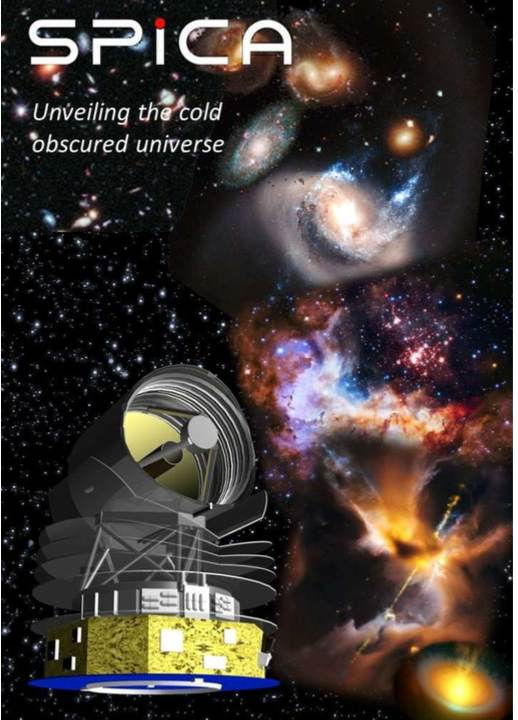
As you may recall, one year ago, 5 October 2016, the SPICA proposal for a mechanically cryo-cooled infrared space telescope was submitted to ESA’s M5 Cosmic Vision call. In total, thirty-five proposals were submitted to that call. We learned on 7 June 2017 that thirteen proposals, including SPICA, made it through the technical and programmatic review, a hurdle designed to ensure that the required technology was feasible and within the M5 budget envelope. Since that time, these remaining mission concepts have been undergoing rigorous scientific review. As part of the review process, on 20 October the ESA review committee sent out a list of written questions to each mission team with responses due by 31 October. The questions which the SPICA project received were well posed, but all relatively easily addressed.
The final step in the review process was a face to face meeting that took place on in Paris on 8 November. The SPICA PI, Peter Roelfsema, was allowed to take two scientists with him to face the review panel. Accompanied by Takashi Onaka (JAXA) and Martin Girard (CNES), the SPICA team appeared before the ESA panel. Peter Roelfsema reports that the review panel “posed solid/direct questions, mostly for deeper clarification on the answers we had already given, that in my opinion we could address really well. From our side there was no insecurity, no hesitation and we stayed to the point and direct at all times.” Further, “I can safely say that both in the written answers earlier this month as well is in today’s interview we did exactly what was needed – bring across that we have a well-conceived mission, with solid and well-founded science goals, with an open mind as to necessary work and/or adaptations that will need to be done as we learn more in the next years, and all that backed by a very knowledgeable and motivated consortium. I am sure we, again, significantly reinforced our path towards the M5 shortlist.” According to the ESA M5 review schedule, ESA was to have announced the winning proposals selected for mission studies in December. However, we have recently learned that complications with the M4 decision process have led to a delay in the M5 decision, which is now expected in February 2018. Assuming that SPICA is selected at that time, an outcome for which we remain optimistic, what will follow will be an intense and active three year phase of instrument development to ensure that the Technology Readiness Levels (TRL) of the various subsystems are at the required level (TRL5/6) before the final mission selection, which is due to take place in February 2021. There is considerable optimism and excitement about the SPICA mission.
At the recent consortium meeting in Rome, attended by myself and Doug Johnstone, many of us were taken off guard by the outright confidence of our PI. Furthermore, these recent SPICA team interactions with ESA have all been very positive. Canada was a founding member of the SPICA team, and although it has been a long journey, dating back to our first meeting (also) in Rome in 2009, it appears that very exciting news is imminent. You may recall that under the current work package breakdown Canada has been assigned the critical high resolution spectrometer (a Martin-Puplett polarizing Fourier transform spectrometer). This builds on Canadian excellence both in academia and industry. The return from this investment to Canadian scientists like yourselves will be more than four times that awarded to the Canadian Herschel SPIRE team. Herschel was, of course, an amazing success, in part due to the great Canadian scientists involved. Indeed, it is most definitely the success of the Herschel mission that has spurred on the SPICA consortium in making its case to ESA.
Finally, as with all missions, CSA funding will depend upon strong support from the scientific community. Missions must be identified in the Long Range Plan (LRP) and must have a strong cadre of scientists who can exploit the scientific return on what will be a significant investment. Your role in this regard is essential. Toward this end, a series of refereed SPICA science papers have been published (see below) and the next SPICA consortium meeting, Groningen in March 2018, will devote an entire day to science talks. Finally, an open international conference dedicated to SPICA science is being planned for February/March 2019; Doug Johnstone is part of the SOC. Clearly these are exciting times for SPICA. On behalf of the mission thank you for your continued support! SPICA CanadaSPICA Science
The DAO 100 Project
By James di Francesco (Cassiopeia – Winter 2017)
Next year, 2018, will mark the 100th anniversary of the Dominion Astrophysical Observatory. Several celebratory events are being planned to commemorate this historic event. One planned event, the DAO100 Project, will greatly benefit from your contribution. Thank you to all those who have very kindly sent us contributions already!
We wish to celebrate the 100th anniversary by collecting vivid accounts of life at the observatory from its current and former staff, postdocs, students, and visitors over the past several decades. We are looking for your best stories here and invite you to kindly contribute to this ambitious enterprise. Highlights of the collected material will be shared as part of other events planned for the 100th anniversary, and woven into an article to be published in the Journal of the Royal Astronomical Society of Canada.
To stimulate ideas about your contribution, please consider the following about your DAO experiences:
When were you at DAO and what role did you play while here?
What was the most memorable interaction you had with others at DAO?
What was your favourite project?
What contribution (e.g., scientific discovery, instrumentation development, computational project, technical or administrative activity) from your time at DAO do you remember most fondly?
What was the funniest thing that happened to you during your time here?
Was there anything special about DAO you’d like to impart?
What significance did DAO play in your life?
Of course, these are just suggestions, and anyone is free to submit any anecdote or particularly meaningful pictures they’d like to share. All contributions will be properly credited to the submitters. (Some light editing may be required, but we will strive to preserve the spirit of all comments and consult with you where necessary to ensure clarity.)
Submissions of any length are welcome but we ask that you focus your recollections to avoid an intended submission from becoming too ambitious to complete. Please send any and all submissions to DomAstObs100@gmail.com by 7 January 2018. Also, please share this invitation with your colleagues so we can get the widest possible distribution.
CRAQ Summer School Announcement
By Robert La Montagne (Cassiopeia – Winter 2017)
The Centre for Research in Astrophysics of Quebec (CRAQ) is announcing its annual Summer School, which will be held on June 19-21, 2018 in Montreal, Quebec.
This year’s topic will be “Large-Scale Astrophysics: galaxies and beyond”. This 3-day school will focus on our understanding of galaxies, including galaxy dynamics and populations, their environments and the use of galaxies as cosmological probes. The summer school will include formal lectures from local and international experts in the field.

The CRAQ Summer School is principally aimed at graduate students in the field of physics, astronomy, and astrophysics, although students who have completed an undergraduate program in physics will also be accepted.
There is no registration fee. However, we cannot offer traveling funds or cover lodging expenses. Lodging at a reasonable cost will be made available to the participants on the university campus.
Additional information about the program, registration and accommodation will be available soon on this site.
Email contact: Summer.School@craq-astro.ca.
A Call to Action for Canadian Astronomy in Space
By Jeremy Heyl (Cassiopeia – Winter 2017)
Over the next few months, the federal government is developing a new long-term plan for the Canadian Space Agency. We believe that the government wants to make a major and possibly transformational investment in space exploration. However, they want to see broad support from the community before they will act.
We developed “A Vision for Canadian Space Exploration” that calls for a sustained, competitive and comprehensive program of science in space over the next decade (see document here) to keep Canada competitive economically, technologically and scientifically. We have presented this vision to members of parliament, the Canadian Space Agency and the responsible ministers.
Now is your chance to drive major change in how astronomy is done in Canada. Canadian astronomers have led globally through partnering in and building the best ground-based facilities. Now astronomy from space plays a larger and larger role in the latest discoveries. Please reach out to your member of parliament to let them know that Canada should invest in space exploration with a sustained program of competitively chosen missions. Let them know how space astronomy can inspire our communities, develop new technologies and train the next generation of innovators for Canada.
Results from the First Indigenous Astronomy Workshop at the
By Hilding Neilson, CLTA Assistant Professor (U of Toronto)
(Cassiopeia – Winter 2017)
On November 2 and 3 2017, we held a workshop on the topic of Indigenous astronomy at the University of Toronto. The workshop was sponsored by the Centre for Indigenous Studies, the Dunlap Institute for Astronomy & Astrophysics and the Department of Astronomy & Astrophysics. The purpose of the two-day workshop was to bring together astronomers, educators and Indigenous scholars from around the Greater Toronto region to discuss methods for improving engagement with Indigenous communities and how to be more inclusive in delivering Indigenous knowledge in the classroom. This workshop is part of a larger initiative to develop new curriculum and learning materials around Indigenous astronomy.
More specifically, the goal of the workshop was to address the following three questions:
How do we enhance Indigenous knowledge in the astronomy classroom?
How do we build connections between astronomer and Indigenous communities?
How do we motivate more Indigenous people to participate in STEM and education?
As part of the workshop, we invited speakers from across eastern Canada to lead this discussion. The workshop was opened by Elder Andrew Wesley who related his own personal connections with the sky and nature along with the importance of understanding nature as part of Indigenous culture. This was followed by Professor Melanie Jeffery, who shared about developing the Indigenous Ecology course that is a science breadth course at the University of Toronto. That discussion highlighted the need to understand Indigenous worldview as part of the education process in science along with the tensions between literacy and oral traditions in learning. One of the more interesting topics in the discussion was the role of storytelling in the teaching methodologies that can be incorporated into astronomy teaching as a way to diversify teaching and learning.
Professor Cheryl Bartlett from Cape Breton University and Ms. Carola Knockwood from Mi’kmaw Kina’matnewey presented talks around the concept of Two-Eyed Seeing in science. This concept was highlighted in the Naylor report on science as a way to connect research in the academic sphere with First Nations knowledge systems and perspectives. Both speakers discussed the value of Two-Eyed Seeing for health and biological sciences and how astronomers might consider applying this philosophy. Ms. Knockwood also discussed how Eurocentric knowledge methods used in academia are not necessarily serving Indigenous learners because of how Universities tend to be disconnected from traditional Indigenous knowledge.
We also heard from Mr. Frank Dempsey from the Royal Astronomical Society of Canada who has spent years sharing Indigenous astronomy stories with the public and Dr. David Pantalony from the Canadian Museum of Science and Technology. Mr. Dempsey discussed various stories from the Mi’kmaw tradition of Muin and the Seven Hunters along with stories about constellations that are similar to Orion and the Pleiades. Dr. Pantalony presented a discussion on a new exhibit at the museum centred on Indigenous sky knowledge that was co-curated with Prof. Annette Lee from St. Cloud State University and Mr. Wilfred Buck from the Manitoba First Nations Education Resource Center as an initial step to including Indigenous knowledge in science outreach.
Along with the talks, a significant fraction of time of the workshop was dedicated to discussion of the three key questions and to develop strategies for engagement with Indigenous knowledge and Indigenous communities. In particular, three important lessons are:
We, as astronomers, should work to interact with and learn from Elders and knowledge keepers on their terms. Many Elders want to share their knowledge and see it used respectfully and earnestly.
When we discuss Indigenous knowledge in the classroom it should be done in context. That discussion should acknowledge the place of that knowledge in Indigenous life. This context includes discussion of culture, prejudice and the impact of colonization. While this discussion is challenging we cannot simply discuss Indigenous astronomy without discussing Indigenous culture and history.
In various talks, stories were related about how university/college education requires Indigenous students to think in terms of western knowledge system that treats their own knowledge as less valuable. This settler mentality creates added stress for Indigenous student wishing to pursue advanced education. One way to encourage more Indigenous students is to build community connections that encourage working in both western and Indigenous knowledge systems.
This workshop and public discussion was the first step in developing curriculum for astronomy courses around Indigenous content and developing strategies for collaborating and serving Indigenous communities in Canada. This initiative is important as our astronomy courses do not reflect the diversity of the nation and ignores the contributions of Indigenous knowledge. It is the hope of those involved with this workshop that it be the first workshop of many and helps move forward the national conversation the astronomy community needs to have about delivering and including Indigenous astronomy knowledge in the classroom.
A Note from the Editor
By Joanne Rosvick, Cassiopeia editor (Cassiopeia – Winter 2017)
Hello everyone!
I wanted to write a short note to thank Magdalen Normandeau for her help as co-editor these past few years. She certainly taught me a few things about formatting and publishing a newsletter, and I appreciated her assistance greatly. I wish her every success in her future endeavours. Thanks, Magdalen!
I hope everyone has a safe, happy holiday season, and all the best in 2018!

Comments