Canadian Astronomical Society

2026 Executive Award: Laura Parker
CASCA is pleased to announce Prof. Laura Parker as the recipient of the 2026 Executive Award for Outstanding Service.
Prof. Laura Parker is an exceptional citizen of the Canadian astronomical community, demonstrated through a quarter century of dedicated service and leadership at the local, national, and international levels. Since her time as Chair of the CASCA Graduate Student Committee in the early 2000s, Prof. Parker has selflessly stepped into service roles, including serving two terms as Director on the CASCA Board, co-chairing the 2025 CASCA Midterm Review, and leading prominent international groups like the Gemini Science and Technology Advisory Committee and the CFHT Science Advisory Council. She has also participated extensively across the CASCA committee portfolio with notable service on the Ground-based Astronomy Committee, the Joint Committee on Space Astronomy, and the Education and Public Outreach Committee. She also co-chaired the LOC for the 2015 CASCA Science Meeting and numerous international scientific meetings. Her generous spirit extends beyond the professional community: she has served as President of the Faculty Association at McMaster University and is currently Acting Associate Dean of Graduate Studies. Prof. Parker also has a long, unwavering history of public outreach, acting as an enthusiastic champion of our field to the Canadian public. Prof. Parker dedicates herself to our astronomical community with a passion and commitment that makes her highly deserving of this honour.

2024 Executive Award: Kristine Spekkens
CASCA is pleased to announce Dr. Kristine Spekkens as the winner of the 2024 CASCA Executive award, recognizing her sustained contributions in service that have strengthened the Canadian astronomical community and enhanced its impact nationally and internationally, in particular through the key role she has played in enabling Canada’s joining the Square Kilometer Array Observatory (SKAO) as a full member in 2023.
Prof. Spekkens began her faculty career in Canada in 2008 after receiving her PhD in 2005 from Cornell University. In the last 15 years, Prof. Spekkens has served on four CASCA committees: Nominating (2022 – present), Equity and Inclusivity 2016-2022 (chair, 2020-2022), Awards 2013-2016 (chair 2014-2016), Ground-Based Astronomy (2011-2013) and on the CASCA Board (2016-2019). She also served on the ACURA TMT advisory council (2017-22), and was vice chair of the 2015 Long Range Plan mid-term review.
Dr. Spekkans also served as a Canadian representative on many international committees including the Visiting Review Committee for the International Centre for Radio Astronomy Research (Australia, 2023), the External Proposal Review Committee for FAST (China, 2023), the NRAO TAC (US, Chair, 2018-19), and NRAO Extragalactic Science Review Panel (2017-19). These many roles testify to the esteem in which the community and external agencies hold Prof. Spekkens’ judgment.
It is in service related to the SKA Observatory that Prof. Spekkens has played her most critical roles. She
currently serves on the ACURA Advisory Council on the SKA (2017-present), as the Canadian SKA Science Director (2019-present) and as vice-chair of the SKA’s Science and Engineering Advisory Committee (SEAC; 2023-present, committee member since 2021 and previously 2017-19). These roles along with her tireless efforts to advocate on behalf of the Canadian astronomy community were integral to Canada becoming a treaty member of this historic observatory.
Overall, Prof. Spekkens’ service to the Canadian community has been myriad and of the highest quality. She has had a significant impact in enhancing research done by all Canadian astronomers. Her commitment to our community makes her extremely deserving of the CASCA Executive award for 2024.

2022 Executive Award: Chris Wilson
In alternate years, the CASCA Board has the honour to bestow the Executive Award for Outstanding Service “to an individual who has made sustained contributions in service that have strengthened the Canadian astronomical community and enhanced its impact regionally, nationally and/or internationally.” Professor Christine Wilson, of McMaster University, is the recipient of the 2022 Executive Award.
Dr Wilson’s exceptional commitment to the Canadian astronomy community was obvious early in her career. Following her return to Canada to take-up a faculty position at McMaster University in 1992, she immediately contributed to a number of key committees, including an NRC committee on a new national radio facility, and was appointed to a Directorship of CASCA in 1996. Over the following decades she would serve on multiple CASCA committees, including a Mid-Term review panel, often holding positions simultaneously, as well as the Vice Presidency in 2012-2014, and the Presidency 2014-16. Most recently, Professor Wilson has Chaired the CASCA Long Range Plan Community Recommendations Implementation Committee (LCRIC).
In the field of submm astronomy, her reputation for research excellence as well as widely acknowledged management skills lead to her taking on key leadership roles for Canadian science and software interests in the ALMA project. She served as Canadian Project Scientist for ALMA, 1999- 2011, Chair of the Canadian ALMA Science Steering Committee, 2001 – 2010, as well as on four other key ALMA committees and advisories. While there is no question ALMA was the product of a major team effort, her efforts were central in making ALMA the great success that it is, both from a Canadian and international collaboration perspective.
For three decades, Dr. Christine Wilson has been a role-model and committed ambassador for astronomy in Canada. In bestowing this Executive Award on behalf of the Canadian astronomical community, the CASCA Board recognizes her pivotal contributions to both our and the international professional community and extends our utmost thanks and appreciation.
2020 Executive Award: Michael Balogh
In alternate years, the CASCA Board has the honour to bestow the Executive Award for Outstanding Service “to an individual who has made sustained contributions in service that have strengthened the Canadian astronomical community and enhanced its impact regionally, nationally and/or internationally.” Dr. Michael Balogh, of the University of Waterloo, is the recipient of the 2020 Executive Award.
Dr Balogh’s exceptional commitment to the Canadian astronomy community was highlighted early following his return to Canada to take up a faculty position at the University of Waterloo in 2004. Shortly thereafter, he joined the Optical and Infrared Astronomy Committee and was rapidly promoted to its Chairship in 2006. Over the next decade he would serve on CASCA’s Awards committee and the Long Range Plan Implementation Committee, often concurrently in these capacities.
Building on both his international reputation for research excellence as well as his prodigious committee skills, he was appointed to the Board of the Gemini International Observatory in 2010. After only two years on the Board he was appointed Board Chair at a particularly difficult time for the observatory as it coped with the UK’s departure from the consortium. Nonetheless, during his 2-year tenure as Board Chair, the observatory would bring in new approaches to large surveys as well as innovative instrumentation programs.
By 2015, his expertise was further recognized by him being asked to serve as one of the members of the 2015 Mid-Term Review Panel. He embraced this role with great enthusiasm, attending all the town-hall meetings and being an engaged, active and connected contributor during the writing of the report.
Most recently, Professor Balogh has shown exceptional leadership as the inaugural – and, so far, the only – Chair of the CASCA/ACURA Thirty Meter Telescope (TMT) Advisory Committee (CATAC). Dr Balogh has shown a staunch commitment to open, frank and inclusive discussion from the beginning of his appointment. His preparedness to listen and discuss difficult issues, as well as a sharp focus on key scientific issues, has led to CATAC being held up by other partners as an example of how to collegially make recommendations.
For almost two decades, Dr. Michael Balogh has been a committed advocate and international ambassador for astronomy in Canada. In bestowing this Executive Award on behalf of the Canadian astronomical community, the CASCA Board recognizes his exceptional contributions to our, and the international, professional community and extends our utmost thanks.


2018 Executive Award: Greg Fahlman
In alternate years, the CASCA Board has the honour to bestow the Executive Award for Outstanding Service “to an individual who has made sustained contributions in service that have strengthened the Canadian astronomical community and enhanced its impact regionally, nationally and/or internationally.” Dr. Greg Fahlman, of NRC Herzberg, is the recipient of the 2018 Executive Award.
Among his numerous accomplishments in research and service, Dr Fahlman is arguably most well known as the leader of the National Research Council Herzberg, Astronomy and Astrophysics Research Centre. During his time in this capacity, which is now 15 years, he has both developed and bolstered what is Canada’s defacto national laboratory for astronomy. His leadership has contributed both to the development of Canadian astronomy while also helping establish and strengthen our international partnerships. At the same time, his vision and execution have been immensely important to not only the day-to-day operations of our field, but also to its detailed planning process, as facilitated through the “Long Range Plan” for Canadian astronomy. His commitment to ensuring strong ties between NRC Herzberg and the university research community has provided a platform for the entire field in support of the execution of the two LRPs.
Prior to taking on the leadership of NRC Herzberg, Dr Fahlman was the Executive Director of the Canada-France-Hawaii Telescope (CFHT) and during this time CFHT laid the foundations for some of its most widely cited research to-date. He also continues on in advising capacity for CFHT as a Board Member, leveraging both his operational knowledge of the NRC as well as providing advice to help CFHT further build its international connections as it prepares to evolve towards a new facility.
His vast experience of facility operation and development played a pivotal role in Canada moving forward with the Thirty Meter Telescope (TMT) as well as the Square Kilometer Array, both projects singled out as top priorities in LRP2010. With Canadian researchers have being central to the development of the TMT project shortly after the development of the first Long Range Plan (LRP2000), Dr Fahlman’s contributions at the administrative level helped chart the path forward to eventual funding in 2015. As the TMT project moves forward Dr Fahlman continues to play a pivotal role on the Board of the TMT Observatory, while at the same time representing Canada’s interest in the SKA on its Board of Directors.
A graduate of the University of Toronto in 1970, Dr Fahlman began his faculty career at the University of British Columbia in 1971. His work would cover many different fields in astronomy, from magnetic fields in stars through to stellar clusters. To date, he has authored or co-authored more than 200 papers that have been cited more than 5,600 times by researchers worldwide and most recently is known for his research on the Milky Way’s star clusters, both young and old.
For almost five decades, Dr. Fahlman has been a driving force and steadfast supporter of astronomy both in Canada and beyond. In bestowing the Executive award the CASCA Board both applauds and recognizes Dr Fahlman’s exceptional accomplishments and contributions.
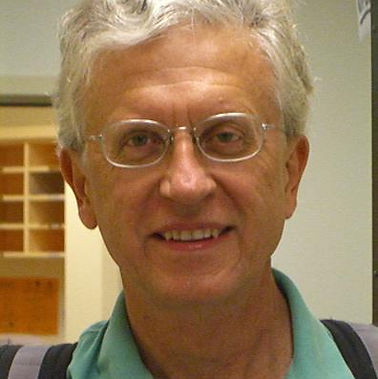
2016 Executive Award: Ralph Pudritz
CASCA is pleased to announce that Dr. Ralph Pudritz, from McMaster University, is the 2016 recipient of the CASCA Executive Award.
In 1998 Dr. Pudritz was appointed the chair of the original Long Range Planning panel, the outcome of which was the highly influential LRP2000 report (“The Origins of Structure in the Universe”). Prior to this report, individual leaders and panels in various sub-disciplines had succeeded in developing Canadian involvement in a range of facilities and institutes, but LRP2000 was the first long-range plan that the Canadian astronomical community itself generated through a process of broad consultation, debate, and, ultimately, consensus. Dr. Pudritz drove this process forward with vision and energy. LRP2000 not only succeeded in cementing Canadian involvement in ALMA, TMT and the SKA (remarkable in the face of the very challenging funding climate), it also succeeded in transforming the process by which our community communicates our aspirations to the federal and provincial governments and other funding partners. The LRP2000 report became the model for future decadal plans that
have succeeded in developing a unified vision for Canadian astrophysics, and this success is in no small measurable attributable to the efforts of Ralph Pudritz and to his colleagues on the LRP2000 panel. Dr. Pudritz has subsequently gone on to develop the Origins Institute at McMaster University, a visionary research and teaching institute with a multidisciplinary focus on biology, mathematics, physics and astrophysics. This is another achievement well worthy of recognition by the Executive Award.
The Board of Directors of CASCA congratulates Dr. Pudritz on his distinguished career of scientific achievement, thanks him for his outstanding record of service to the community, and is honoured to award him the 2016 CASCA Executive Award.

2014 Executive Award: Peter G. Martin
In alternate years, the CASCA Board has the honour to bestow the Executive Award for Outstanding Service “to an individual who has made sustained contributions in service that have strengthened the Canadian astronomical community and enhanced its impact regionally, nationally and/or internationally.” Dr. Peter G. Martin, of the University of Toronto, is the recipient of the 2014 Executive Award.
A graduate of the University of Cambridge, Dr. Martin moved to the University of Toronto shortly after receiving his PhD in 1972, where he quickly began a series of efforts — continuing to the present day — that bolstered Canada’s reputation as a world leader in astronomical research. In 1984, he co-founded the Canadian Institute for Theoretical Research (CITA), which quickly grew into one of the world’s leading centres for theoretical astrophysics. During the past decade, he worked tirelessly to establish the Dunlap Institute for Astronomy and Astrophysics, now poised to become a major centre for the development of astronomical instrumentation. The Canadian astronomical community, as a whole, benefits greatly from both CITA and the Dunlap Institute: e.g., through CITA’s National Fellows program, a vital source of postdoctoral funding for Universities across the country, and through the outreach efforts to which both Institutes are firmly committed.
Dr. Martin’s contributions to the national community are equally extensive. He has served on countless national and international committees, including the Coalition for Canadian Astronomy and the Association of Canadian Universities for Research in Astronomy (ACURA), of which he was one of the founding advisors. His ties with CASCA are particularly strong: he served as President of the Society between 2006 and 2008, and two of CASCA’s most prestigious awards, the Martin award and the Dunlap Award for Innovation in Astronomical Research Tools, are endowed thanks to his initiative.
With over 280 publications in peer reviewed journals, on topics ranging from the interstellar medium to active galactic nuclei, Dr. Martin has received numerous prizes and honours, including CASCA’s Beals Award in 1994. He was elected to the Royal Society of Canada in 2007.
For more than four decades, Dr. Martin has been a driving force and steadfast supporter of astronomy in Canada. In bestowing the Executive award on behalf of the entire astronomical community, the CASCA Board recognizes his outstanding contributions to our society and extends to Dr. Martin a small, but heartfelt, token of our gratitude.

2013 Executive Award: John Hutchings
The 2013 recipient of CASCA’s Executive Award is Dr. John B. Hutchings, of the National Research Council of Canada.
A native of South Africa, Dr. Hutchings joined NRC in 1967, after graduating from Cambridge University. During his long and distinguished career, Dr. Hutchings has received numerous awards and honors, including the Beals Award from the Canadian Astronomical Society in 1982, the Gold Medal from the Science Council of British Columbia in 1983, and the Queen’s Golden Jubilee Medal in 2002. He was elected to the Royal Society of Canada in 1987. Although he formally retired from NRC in January 2012, this has had no effect on his commitment to strengthening the role of astronomy within Canada.
The author of over 450 papers in refereed journals, Dr. Hutchings is in the top 0.5% of most cited astrophysicists worldwide. He has worked on remarkably diverse topics including massive stars, stellar winds, X-ray binaries, novae, cataclysmic variables, the interstellar medium, active galaxies and quasars, radio galaxies, and high-redshift galaxy clusters. For this, he has used of a wide array of space- and ground-based facilities, from X-ray and ultraviolet satellites to radio interferometers.
Often working on astronomy’s forefront topics, from his early career Dr. Hutchings has been an indefatigable champion of space astronomy, leading Canadian participation in a series of key missions, including the International Ultraviolet Explorer, the Hubble Space Telescope, the Far Ultraviolet Spectroscopic Explorer, Astrosat and the Ultraviolet Imaging Telescope, and the James Webb Space Telescope. In particular, beginning in the early 1980s, Dr. Hutchings worked tirelessly to secure Canadian participation in FUSE, negotiating access policies that enabled Canadian scientists to gain greater access than would be expected given Canada’s share of the costs, and leading the design of FUSE’s Fine Error Sensor (FES) camera, a critical system responsible for the precise tracking of the telescope.
The FES represented Canada’s first foray into international space astronomy hardware, meeting tracking and pointing specifications far more stringent than required by any previous Canadian effort in space plasma physics or communications satellites. Moreover, the FES package helped to open the door to Canada’s participation in JWST, thus enabling Canadians to be part of one of the most technologically advanced, and scientifically exciting, astronomy projects ever undertaken. From the initial phases of JWST’s mission design, Dr. Hutchings worked closely with the CSA and NASA to support negotiations that ultimately resulted in Canada being responsible for the design and construction of two of JWST’s critical instruments: the Fine Guidance Sensors (FGS), and the Near Infrared Imager and Slitless Spectrograph (NIRISS). Dr. Hutchings has been Canadian Project Scientist for JWST from 2001 to 2012, as well as Principal Investigator for the FGS.
Finally, Dr. Hutchings has been a steady voice and leader in many national and international committees. In Canada, he is a key contributor to CASCA/CSA’s Joint Committee for Space Astronomy, and a member of CASCA’s Ground Based Astronomy committee, of the Coalition for Astronomy TMT Planning Committee, and of CSA’s Euclid Science Advisory Committee. He is currently chair of CASCA’s Long Range Plan Implementation Committee, which is actively working to establish a framework for implementing and operating Canadian astronomical facilities in the coming decade.
For more than four decades, Dr. John Hutchings has charted a course of excellence for Canadian astronomy, setting the highest standards in scientific achievements, technical contributions, and service to the community.

2010 Executive Award: James E. Hesser
Abstract Not Available